Conchi — the Natural Pool — is a basin of volcanic rock on Aruba's windward northeast coast where waves spill in over the stones but the worst of the surf stays out. It sits inside Arikok National Park, and no paved road reaches it. You get there by 4x4, guided tour, horseback, or on foot, and every one of those routes is part of the experience. This guide covers the current entry fee, all four access options compared head-to-head, the Daimari Beach hike step by step, and exactly when it is safe to swim.
What Is the Natural Pool (Conchi)?
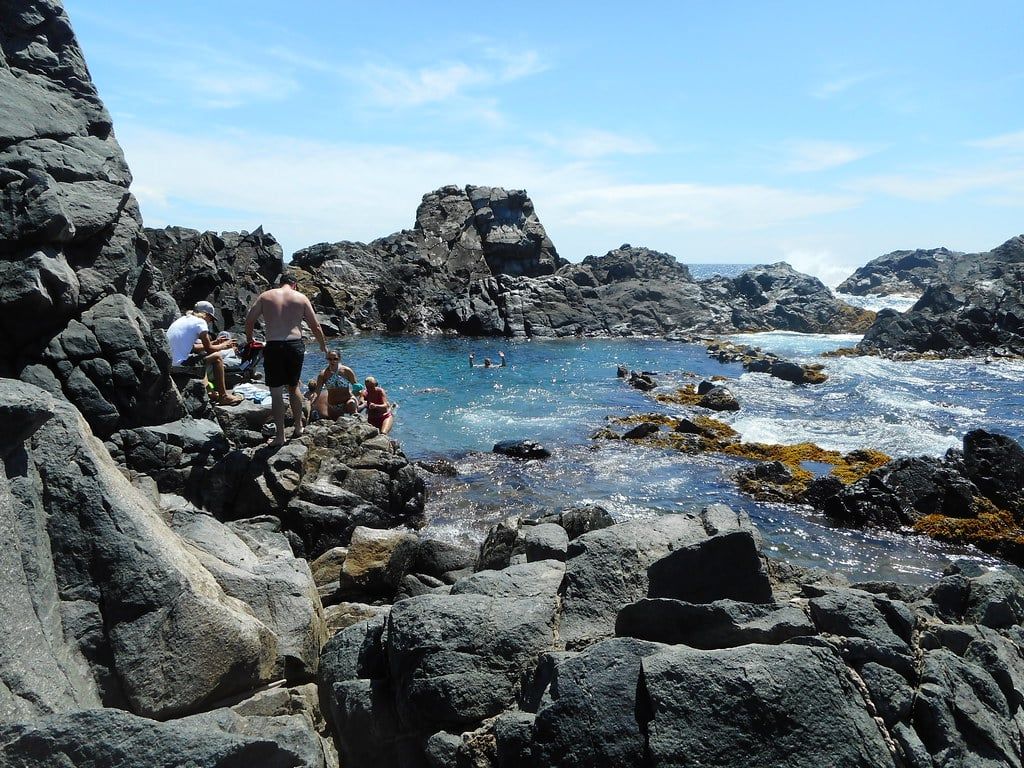
Locals call it Conchi, Papiamento for "bowl," and older maps call it Cura di Tortuga — Turtle's Cove. Both names fit. A ring of volcanic stone circles a natural depression on the shore, and Caribbean breakers that flatten everything else along this coast break apart against it, leaving a pool of tranquil water behind the rocks.
It is small. The main pool is an oval roughly 20 feet long by 25 feet wide, with a smaller, shallow upper tier beside it that fits a few people at a time. What it lacks in size it makes up for in setting: you swim in ocean water without fighting the ocean, in a landscape of black rock and crashing surf.
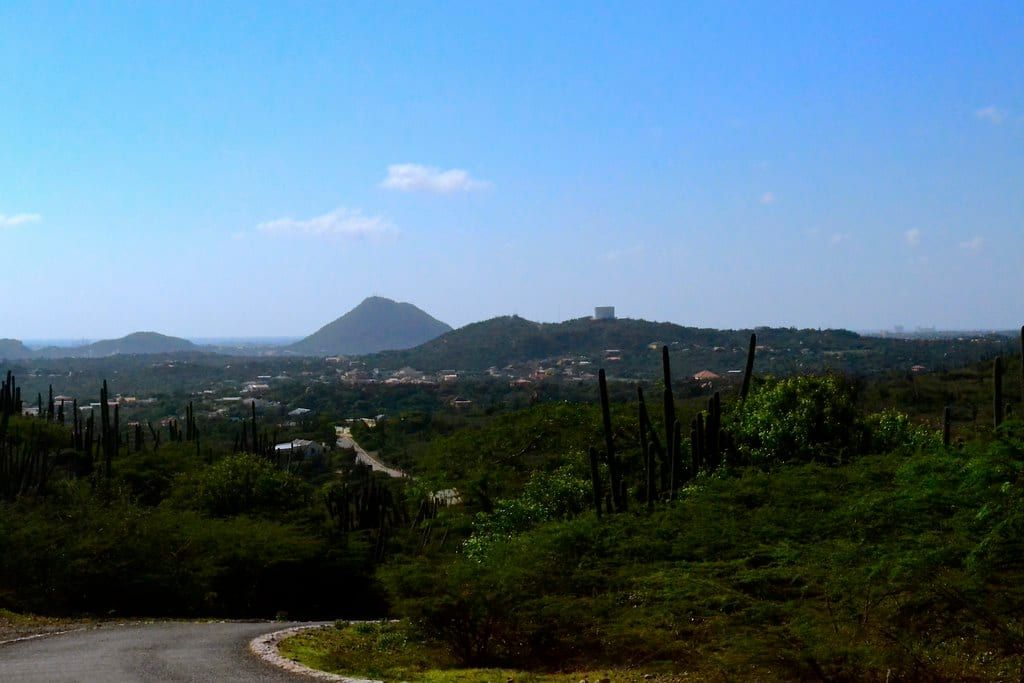
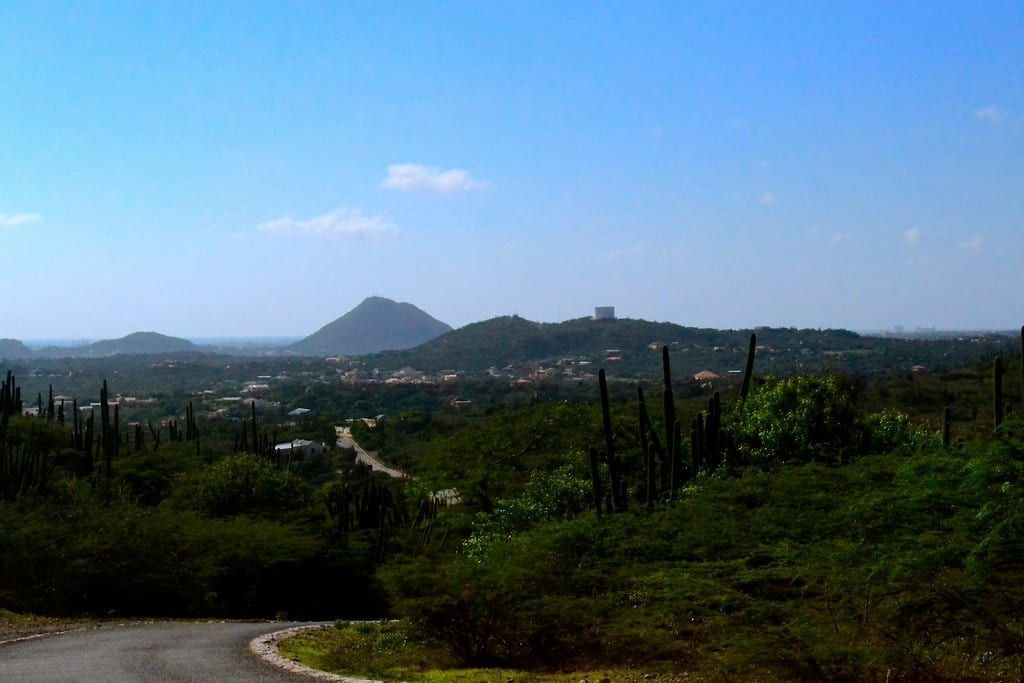
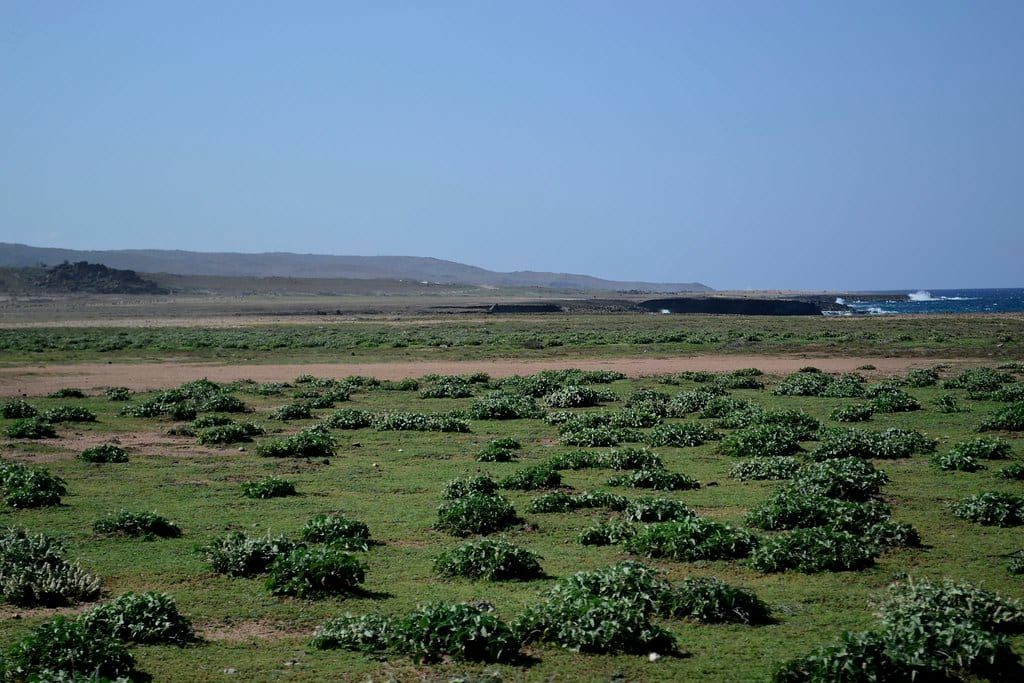
The pool sits inside Arikok National Park, a 34-square-kilometer protected area covering nearly 20% of Aruba. Don't picture forest — Arikok is cactus desert, wind-bent divi-divi trees, limestone terraces, and dry gullies, with trade winds blowing constant. Conchi is one of the park's signature sights, and it stays remote and undeveloped: the only commerce on site is a small snack stand at the top of the stairs. Everything else you need, you carry in.
Where Is the Natural Pool Located?
Conchi sits on Arikok's northeast (windward) coast, in a remote corner of the park well away from the main sightseeing roads. The plus code is G3FC+QH Santa Cruz, Aruba (roughly 12.5244, -69.9286) — drop that into Google Maps and save it offline before you go, because cell reception inside the park comes and goes.
From Oranjestad or the hotel strip, the drive to the San Fuego park entrance takes roughly 30–45 minutes. The in-park leg is the slow part: from San Fuego the road is paved at first, then turns to gravel around Sero Arikok, and a signed "4x4 Vehicles Only" section guards the final stretch to the pool — about 45 minutes to an hour each way. For full route detail, see getting to Arikok National Park.
A regular car cannot make it, and the restriction is enforced: standard passenger vehicles are not permitted past the park checkpoints on the Conchi access. Sedan drivers have three choices — tour, horseback, or the Daimari hike — all covered below.
Entrance Fees, Hours & Payment: Know Before You Go
The Arikok conservation day-pass costs $22 per adult; children under 17 are free, and residents of Aruba, Bonaire, and Curaçao get a discount with a local photo ID. Plenty of older articles still quote $11, $15, or $20 — those figures are years out of date. Passes are sold at both park entrances, San Fuego and Vader Piet, and no advance booking is needed for a standard visit.
Hours matter more than you'd expect. The San Fuego entrance and Visitor Center open daily 8:00 am–3:30 pm; the Vader Piet entrance runs 8:30 am–3:00 pm. Some listings still advertise 8 am–4 pm, but the park authority's posted closings are 3:30 and 3:00, and cave visits and ranger tours wind down before that. Arrive early — before 10 am is the sweet spot. Current details live on our park hours and entry fees page.
Facilities are thin. A small snack and drink stand operates at the top of the stairs to the pool during the day — bring some cash for it. There are no bathrooms at Conchi; the only restrooms in the park are at the Visitor Center and the restaurant between Boca Prins and the Fontein Cave. Go before you commit to the coast.
Accessibility is the honest caveat: the site is not wheelchair accessible. The descent to the water involves uneven rocky paths and steep natural stone steps, and it requires moderate physical ability. If you're traveling with someone with limited mobility, the Visitor Center area is the accessible part of the park — the pool is not.
How to Get to the Natural Pool: 4 Options Compared
Four ways in, four very different days. Here's the honest rundown of each, then the comparison at a glance.
Guided tour
The easiest and most popular route. Operators like De Palm Tours and ABC Tours Aruba run half-day Natural Pool safaris — about 4.5 hours — with hotel pickup, an off-road run to Conchi, and often stops at sights like the caves or Natural Bridge along the way. Prices start around $99 per person, and big-name operators can run closer to $183. One quirk worth knowing: ATV tours are banned inside Arikok's protected areas, so if you book an ATV excursion it rides the coast outside the park — for Conchi itself you want a jeep or horseback tour. Compare the options on our Natural Pool tours and Arikok jeep tours pages. Cruise passengers must book through the cruise line rather than independently.
Self-drive 4x4
Driving yourself means 45–60 minutes each way inside the park on gravel and rock, through the signed 4x4-only section. The catch is insurance: most rental contracts prohibit the Conchi route and void your coverage on it. A few companies — Amigo Jeep Rentals is the known one — explicitly allow it. Confirm in writing before you book, or your scratched undercarriage is your problem. The park speed limit is 20 km/h, and low rocky gullies cross even the main road.
Horseback
Guided rides cross the park's desert trails to the coast, and they suit beginners — the operators match horses to riders. Wear long pants and closed shoes; you'll be in a saddle across cactus country for a couple of hours. It's the most memorable approach if a full day of hiking doesn't appeal.
Hiking
Three routes reach the pool on foot: the Daimari–Conchi trail at 2.4 miles round trip (about an hour plus), a 4.8-mile round trip from the Visitor Center (about 2.5 hours), and a strenuous 6.5-mile option (about 3 hours). Official park guidance calls the hike a 3–4 hour round trip suited to experienced hikers. Guided options are on our Arikok hiking tours page.
| Option | Time | Cost | Difficulty | Best for |
|---|---|---|---|---|
| Guided jeep tour | ~4.5 hours total | From ~$99 pp | Easy | Cruise days, non-drivers |
| Self-drive 4x4 | 45–60 min each way in park | $22 pp + 4x4 rental | Moderate off-road | Confident off-road drivers |
| Horseback ride | Half day | Tour price + $22 pp | Easy–moderate | Beginners, families |
| Hike from Daimari | 3–4 hours door to door | $22 pp | Moderate | Active travelers seeking solitude |
The rule of thumb: on a cruise day or without a driver, book the tour. Confident behind the wheel with a rental that allows it? Self-drive gives you the pool on your own clock. Want the place to yourself and don't mind sweating for it? Hike. And if the hike sounds grim but a jeep sounds boring, the horse wins.
Step-by-Step: Hiking to the Natural Pool from Daimari Beach
The Daimari route is the classic DIY approach and the shortest of the three trails. Done right, it's a half-day adventure with a swim at the end. More trail detail is in our guide to hiking in Arikok National Park; here's the sequence.
First, the logistics. Buy your pass at the Visitor Center — no booth exists at Daimari — and download the offline route before you lose signal. From the Visitor Center it's about a 7-minute drive to the start of the Daimari dirt road, which is rutted but manageable in an SUV; don't attempt it in a sedan. Park at the hilltop overlooking Rancho Daimari and walk down toward the coast.
The walk is roughly 1 to 1.5 miles each way, about an hour per direction. It runs along the coast past Daimari Beach first — a beautiful, kelp-strewn stretch whose water is far too rough to swim in, so admire it from the sand. Then comes a large, blinding-white sand dune you climb over, and a second beach near Boca Keto. After that the terrain turns to jagged black volcanic rock, and you'll see the pool's stone ring ahead.
Budget 3–4 hours for the whole excursion, including 30–45 minutes at the pool. There's zero shade anywhere on the route, and midday sun on that dune is punishing — start early enough that you have daylight for the return, not just the outbound. You come back the same way you came.
Swimming, Snorkeling & Safety at Conchi
The golden rule: swim only when the sea is calm. The rock ring is what makes Conchi swimmable, and when surf runs high, waves crash straight over it and rangers post advisories against getting in. Conditions change quickly — check them that morning and follow whatever the rangers say. A pool you can swim in at 9 am can be closed by noon.
Know the water before you step in. The pool runs about 17 feet deep at its deepest, shifting with the tide, and it gets deep fast — roughly 17 feet within a couple of feet of the shoreline. There's only a small standing area; most of the pool is over your head. Non-swimmers and nervous kids belong in the small shallow upper pool and near the rocks.
Getting down to the water means descending about 97 steps in two to three flights of well-maintained stone stairs. The rocks around the pool are slick and sharp — water shoes are close to mandatory, both for entry and for walking the rim. Pack a dry bag too: waves that top the ring will soak a phone left on the stones.
Cliff jumping: there are small ledges of roughly 5 to 15 feet, and people do jump them. Only in calm conditions, and only after checking the landing zone for depth and waves — a rising swell turns a 10-foot drop into a bad idea. Snorkeling is genuinely good in the deeper middle of the pool; bring a mask and some fish will find you.
One line that can't be softened: never swim outside the rock ring. The open surf and tides on this coast are dangerous and have caused deaths. The pool is the whole point — the ocean on either side of it is exactly what the pool protects you from.
Best Time to Visit & What to Bring
Go early or go late. Tour groups arrive mid-morning and the pool gets crowded in peak season, so before 10 am buys you cooler hiking temperatures, calmer morning water, and the place closer to yourself. Late afternoon works too, if you've confirmed the entrance hours still give you time to get back out.
Season-wise, February through April is Aruba's driest, most comfortable stretch. October through January is the rainy season — November is the wettest month — and rain leaves the park's dirt tracks muddy and rough, which complicates both the 4x4 run and the hike. Whenever you go, check sea conditions that morning; a high-surf day can close swimming entirely and turn the trip into a sightseeing run.
The packing list, consolidated:
- Water: at least 1 liter per person, 2–3 liters if hiking
- Water shoes plus sturdy walking shoes for the trails
- Reef-safe sunscreen and a hat — there's no shade anywhere
- Swimsuit worn under clothes, plus a towel
- Snorkel mask and a dry bag for phones and cameras
- Offline maps downloaded, and some cash for the snack stand
Cruise-day note: if you have one day in port, the DIY hike is a gamble — timing, transport, and sea conditions all have to line up. A tour that handles the drive is the practical call.
Pair the Natural Pool with the Rest of Arikok in One Day
You've already paid the $22 and driven deep into the park, so make a day of it. The classic half-day loop: Conchi first thing while the water is calm and the tours haven't landed, then work back west — the caves, the dunes, and the viewpoints, in whatever order the morning allows.
The two caves are both worth the stop. Quadirikiri Cave extends about 100 feet through two chambers lit by holes in the roof, with hundreds of harmless bats in the darker sections — a ranger walks you in from the parking lot. Fontein Cave is the historically important one, with pre-Columbian Arawak drawings on its ceilings; access is gated and guided because of past graffiti. Our guide to Arikok's caves covers both in detail.
Boca Prins comes next — wind-carved dunes and a staircase down to a dramatic beach beneath cliffs, where swimming is strictly prohibited because of the currents. Save your swimming for Conchi. Other wild stops on the same coast: Dos Playa, two coves that are among Aruba's most important sea-turtle nesting sites, and the surf beaches at Andicuri and Blackstone to the north. Watch, don't swim, at all of them.
Keep your pass and grab the free park map at the Visitor Center on your way in. And if you want a second swimming hole with a fraction of the effort, the Cave Pool near the Bushiribana Ruins — outside the park — is reachable in a regular car, with a fixed ladder down into the water. Lines form by late morning, so go early. More park background is on our Arikok National Park overview page.
Frequently asked questions
Can you swim in the Natural Pool in Aruba?
Yes, when the ocean is calm. The volcanic rock ring shelters the pool from the breakers, but swimming is only safe in calm conditions — waves can crash over the rocks, conditions change fast, and rangers post advisories you should follow. Wear water shoes for the sharp, slick rocks.
How deep is the Natural Pool in Aruba?
Around 17 feet (5 m) at its deepest, shifting with the tide, and it drops off within a couple of feet of the shoreline. Most of the pool is too deep to stand in. Non-swimmers should stay near the rocks and use the small shallow upper pool.
Do you need a 4x4 to get to the Natural Pool?
To drive there, yes — standard passenger cars are not permitted past the park checkpoints on the Conchi route. Your alternatives are a guided jeep or horseback tour, or hiking about a mile each way from Daimari Beach.
How much does it cost to visit the Natural Pool?
The Arikok conservation day-pass is $22 per adult, with children under 17 free. Guided tours that include the pool start around $99 per person and can run to about $183 with the big operators.
Can you hike to the Natural Pool in Aruba?
Yes — three routes: the Daimari–Conchi trail at 2.4 miles round trip (about an hour plus), the Visitor Center route at 4.8 miles round trip (about 2.5 hours), and a strenuous 6.5-mile option (about 3 hours). Start early for cooler trails and daylight on the return.
Is the Natural Pool in Aruba worth it?
When the seas allow swimming, most visitors rank it among the island's highlights — the journey is half of it. It depends on surf conditions and picking the access method that fits your fitness and budget. Plan 30–45 minutes to a couple of hours at the pool itself.
Can you cliff jump at the Natural Pool?
Small ledges of roughly 5–15 feet exist, and people jump them. Check the tide and wave conditions first — waves make the landing area unsafe. Jump only in calm conditions.
Are there bathrooms or food at the Natural Pool?
No bathrooms at the pool. A small snack and drink stand operates at the top of the stairs during the day; the only restrooms in the park are at the Visitor Center and the park restaurant.