Explore Aruba's rugged landscapes on foot with guided hiking tours through Arikok National Park. Options include a sunrise hike to the Natural Pool and a half-day hike paired with snorkeling.
 Free Cancellation
Guided half-day hike through Arikok with snorkeling at Conchi Natural Pool, fruit, water, and hotel pickup included.
 Free Cancellation
Private sunrise hike to Conchi Natural Pool via beach dunes, Daimari and Moro beaches, with hotel pickup.
Read what travelers share about their experience visiting Arikok National Park — from practical tips to personal highlights.
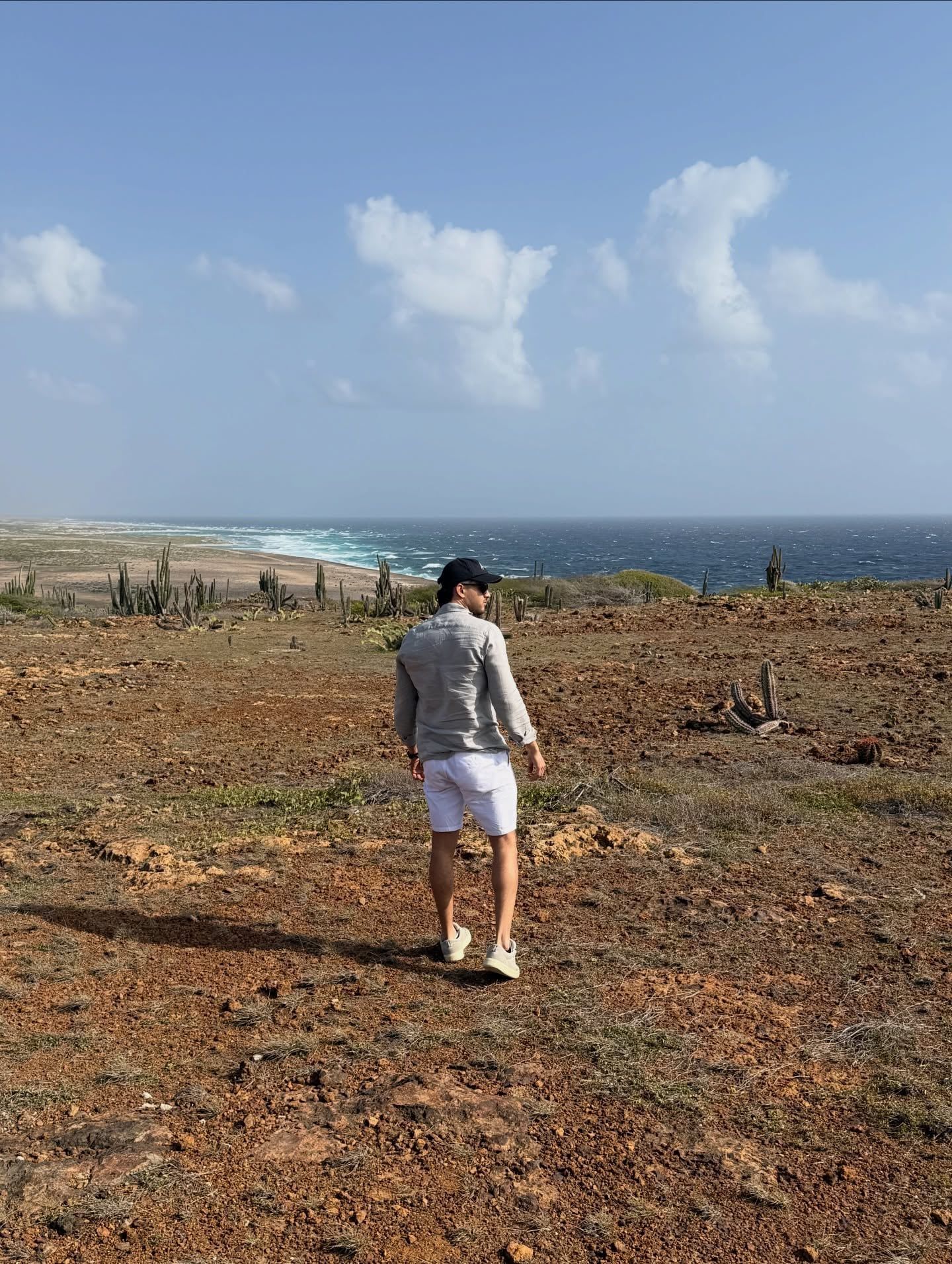
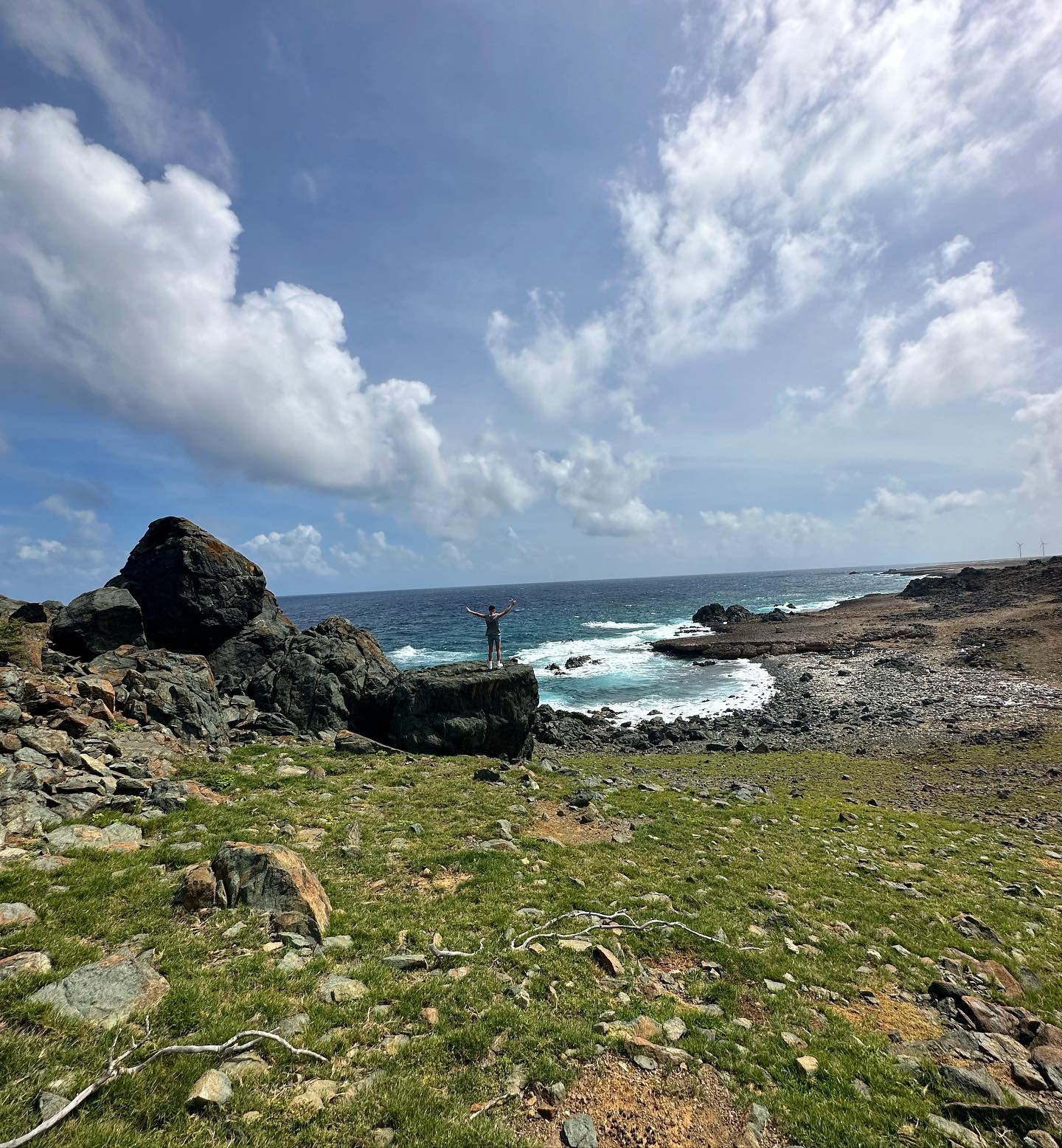
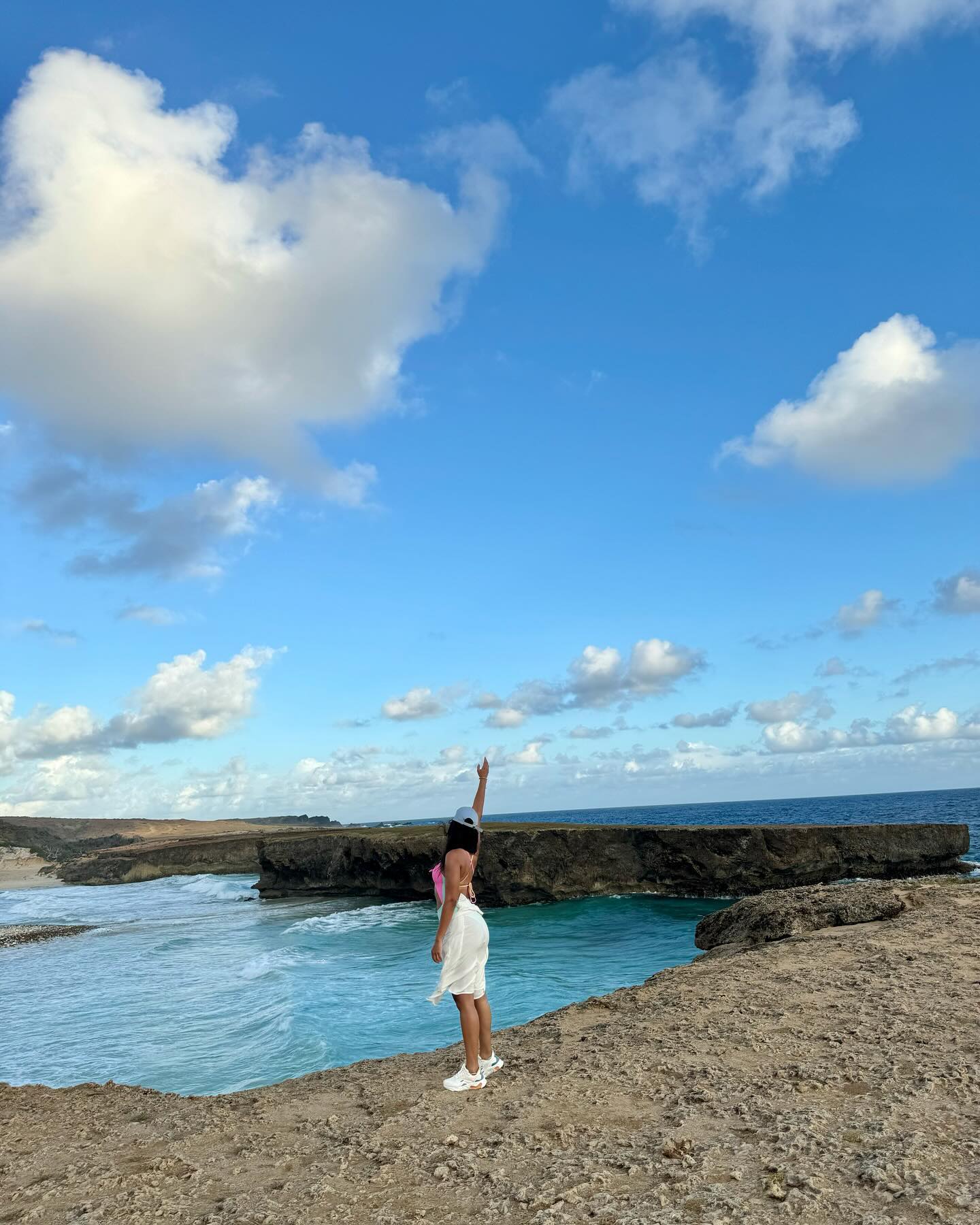
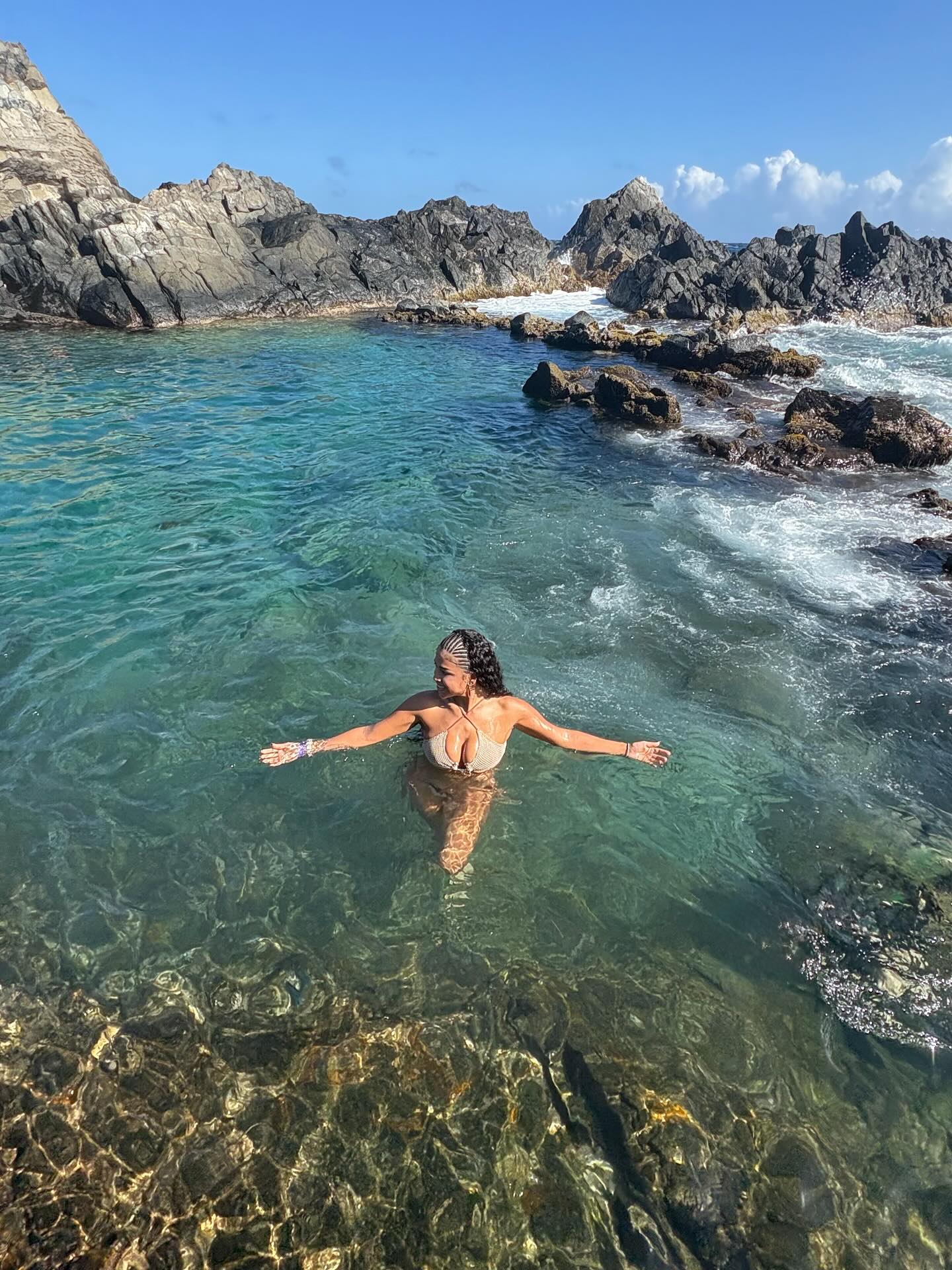
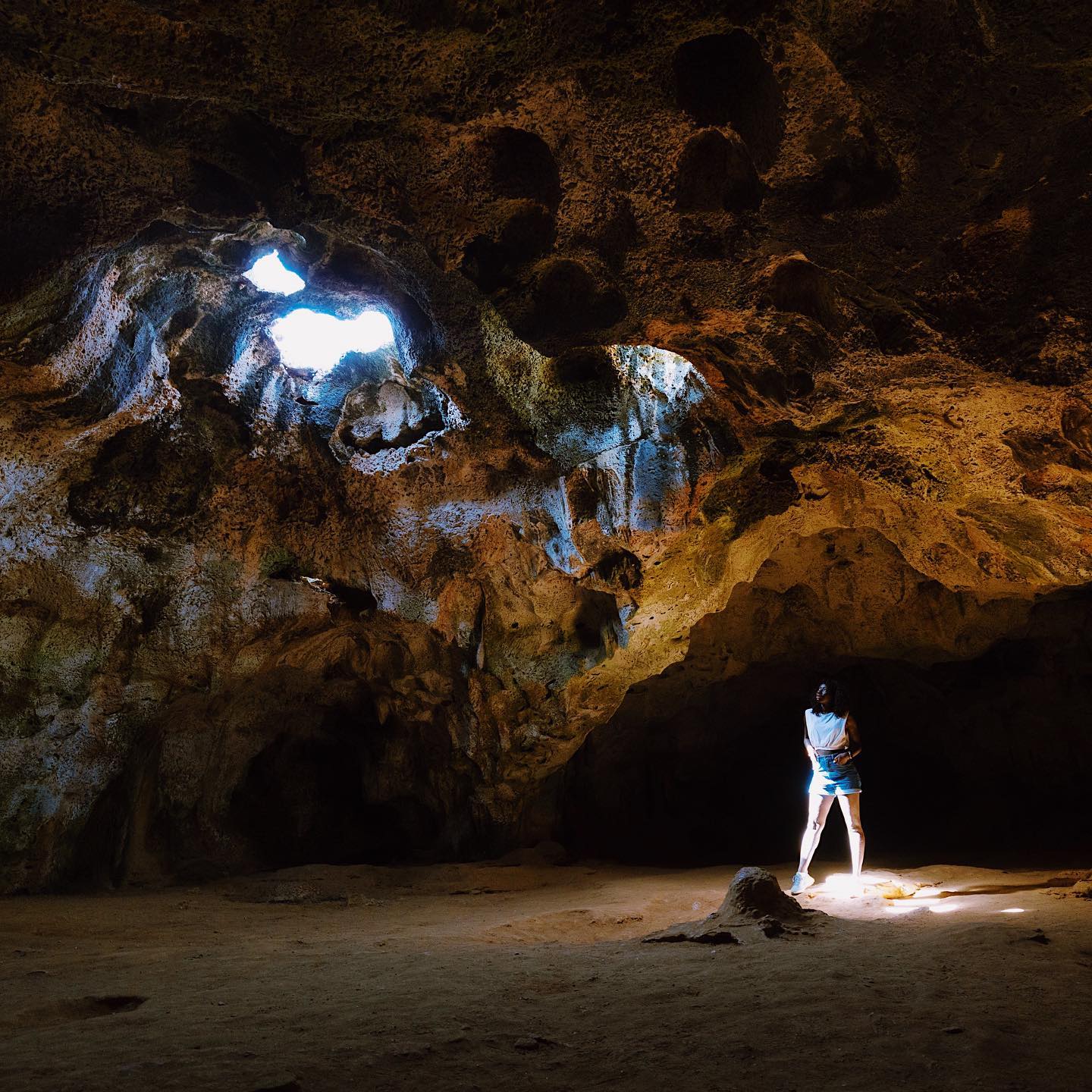
Hiking tours in Arikok National Park put you on foot across roughly 34 km² of Aruba's windward coast — cactus scrub, limestone terraces, and trade winds that never let up. Most tours run half a day, pair the walk with a swim or snorkel at the Natural Pool, and include hotel pickup plus the USD 22 park entrance fee. You'll cover serious distance (one popular option clocks about 11.5 miles), so plan for a real workout, not a stroll.
Quadirikiri Cave runs about 100 feet with two chambers lit by sunlight through holes in the roof — the signature shot of any park visit. Hundreds of harmless bats roost in the darker sections, and a ranger walks you in from the parking lot, pointing out where to duck under the stalactites.
Fontein Cave is the only one in the park with pre-Columbian Arawak pictographs on its ceilings, in red-brown pigment, alongside later marks from early European settlers. Access is gated and guided because of past graffiti, so you'll be with a ranger the whole time.
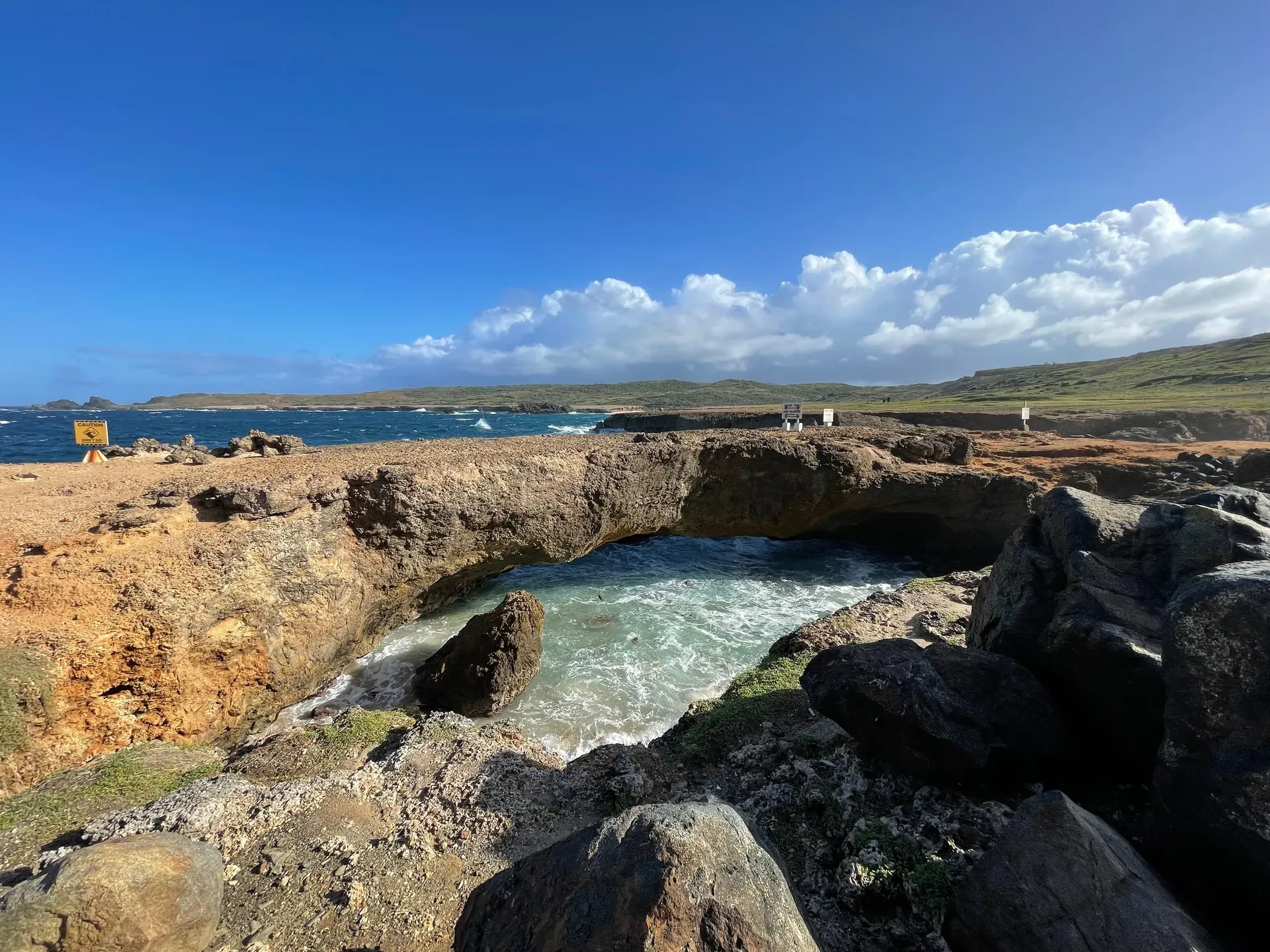
The Natural Pool is a swimmable basin ringed by volcanic rock, reached only by 4x4, horseback, or a long hike — tours include snorkeling gear. When the sea is calm it's superb; when swells rise, waves crash over the rim and rangers post advisories against swimming.
Sunrise tours descend past the blowing dunes of Boca Prins toward Daimari Beach in three 45-minute walking stretches, arriving at Conchi before the heat and the jeep crowds. Trade winds carve the dunes year-round, and early light on them is the best photography you'll get all trip.
The park shelters the endangered Aruba Island rattlesnake (cascabel), the kododo blauw whiptail lizard, the shoco burrowing owl, and green-and-blue Aruban parakeets. Donkeys and goats roam freely and kids love them. Watch where you put your hands — the cascabel is venomous and protected.
Miralamar's overgrown mine workings date from the era when more than 20 quartz-gold veins were carved out of the Aruba Batholith — mining ended in 1916. The Miralamar ranger hike is 2 km and rated easy, one of the gentler ways into the park's interior.
Arikok hiking tours come in two shapes: private guided walks booked through platforms like Viator, or ranger-led hikes booked directly with the park. Here's what matters before you pay.
Two Viator options dominate: a Half Day Hike & Snorkel covering roughly 11.5 miles on foot ($115, rated 5.0 from 38 reviews) and a private Sunrise Hike to the Natural Pool ($110, rated 4.9 from 28 reviews). The park itself runs four ranger hikes — Cunucu Arikok (5 km, easy), Miralamar (2 km, easy), Jamanota Hill (4.8 km, hard) and Rooi Tambu–Dos Playa (7.5 km, hard).
Both Viator tours include the USD 22 park entrance fee in the price, along with water, fruit, and snorkeling equipment. If you book a ranger hike directly with the park instead, you pay the $22 day-pass plus $25 per person for the guide. Kids under 17 enter the park free.
Ranger-led hikes are capped at 10 people and must be reserved in advance by emailing [email protected]. The sunrise and half-day hikes fill up in high season (February–April), so book a week or more out. Standard park entry needs no advance booking at all.
Both Viator tours require moderate physical fitness and warn against participation for travelers with spinal injuries, poor cardiovascular health, or pregnancy. The half-day option is the harder sell — 11.5 miles in tropical heat with essentially no shade. Both run in English, Dutch, and Spanish.
Hotel pickup happens 30–45 minutes before departure, and drivers wait a maximum of 10 minutes — miss it and transport is on you. You must bring a towel or you won't be allowed on the vehicle. Cruise passengers get picked up at the "I Love Aruba" sign outside the terminal, near the gas station.
Most hikers pair the park with a north-coast loop: Ayo Rock Formations (10 minutes away, with visible petroglyphs), the Natural Bridge (under 10 minutes), and the yellow Alto Vista Chapel (15–20 minutes). Jeep tours commonly bundle these stops with a Conchi run.
Both Viator tours offer a full refund if you cancel at least 24 hours before departure. Ranger hikes booked through ACF follow the park foundation's own policy — confirm terms when you email your reservation. Aruba sits outside the hurricane belt, so weather cancellations are rare year-round.
Only the paved path between the San Fuego car park and the Visitor Center is wheelchair-accessible; trails, caves, and the Natural Pool stairs are not. The Cunucu Arikok and Miralamar hikes are manageable for reasonably fit seniors, while Jamanota Hill (rated hard) is not. No trail in the park is stroller-friendly.
Swipe to see more
| Half Day Hike & Snorkel (Viator) | Sunrise Hike to Natural Pool (Viator) | ACF Ranger Hike (Cunucu Arikok) | ACF Ranger Hike (Jamanota Hill) | |
|---|---|---|---|---|
| Price from | USD 115 per adult | USD 110 per adult | USD 25 per person plus USD 22 park pass | USD 25 per person plus USD 22 park pass |
| Duration & Distance | Half day, roughly 11.5 miles on foot | Half day, three 45-minute walking stretches to Conchi | 5 km, about 1.5 hours, rated easy | 4.8 km, about 2 hours, rated hard |
| Best for | Fit hikers who want the full park loop with a swim at the end — rated 5.0 from 38 reviews | Photographers and early risers who want the pool before the crowds and the heat — rated 4.9 from 28 reviews | Families, seniors, and first-timers wanting the restored cas di torto farmhouse and labeled native plants | Hikers chasing Aruba's highest point — Seroe Jamanota, 188 m — and Miralamar gold mine ruins en route |
| What's Included | Water & fruit, snorkel gear, private transport, USD 22 park entrance, short Visitor Center museum tour | Water & fruit, private guide, snorkel gear, all fees and taxes including park entrance | Nature Experience Ranger guide, max 10 people, free trail maps at the Visitor Center | Nature Experience Ranger guide, max 10 people, panoramic views over the island's south |
Swipe to see more
Arikok National Park is open daily. The San Fuego entrance and Visitor Center run 8:00 am–3:30 pm; the Vader Piet entrance runs 8:30 am–3:00 pm. Some travel listings still show 8 am–4 pm, but those are the park authority's (ACF) posted hours.
Arrive early regardless. Cave visits and ranger tours wind down before closing, and jeep/UTV tour groups clog the cave parking areas by mid-morning.
From Oranjestad or the airport, follow Sasakiweg → A1 → Route 4 in Paradera → Arikokweg to the San Fuego entrance (San Fuego 70, Santa Cruz). It's under 40 minutes from the Noord hotel zone, about 30 from Eagle Beach.
A standard 2WD rental handles the paved and gravel roads to the caves and viewpoints. The track to the Natural Pool does not — it takes a 4x4, a tour, horseback, or a multi-hour hike. And note that standard rental insurance usually excludes damage on unpaved trails inside the park, so buy off-road coverage if you're self-driving deep.
February through April are the driest, most comfortable months — March averages just 0.6 in (15 mm) of rain with daytime temperatures around 87°F (31°C). Aruba sits outside the hurricane belt, so the park is open year-round.
October through January is the rainy season; November averages 3.8 in (98 mm), which can leave dirt tracks muddy and complicate 4x4 runs to the Natural Pool. Rain tends to fall in short bursts rather than all-day washouts.
Whatever the month, go early. Before 10 am you get cooler trails, empty cave parking, and ranger advice on whether Conchi is swimmable that day. June–September afternoons are brutally hot on the shadeless trails — skip them.
Only the San Fuego Visitor Center area is wheelchair-accessible, via a paved path from the car park. Trails, limestone caves, the Natural Pool stairs, and beaches are unpaved, rocky, and not wheelchair accessible. Wheelchair-accessible van tours of the north coast exist, but confirm cave access with operators in advance.
For seniors and less mobile visitors, a guided 4WD/jeep tour beats self-driving — the roads bounce over dozens of low rocky gullies. On foot, the Cunucu Arikok trail (5 km, 1.5 hr, easy) and Miralamar (2 km, 1.5 hr, easy) suit reasonably fit seniors; Jamanota Hill (4.8 km, hard) does not.
Kids do well here — cave tours, sun shafts, and roaming donkeys and goats are reliable hits. Carry small children rather than a stroller, and keep them well back from the surf: swimming in park bays is strongly discouraged due to strong currents.
Toilets exist in exactly two places: the San Fuego Visitor Center and the park restaurant between Boca Prins and the Fontein caves. Plan water and food around that before heading to the southern trails.
There is almost no shade anywhere beyond those two spots. Carry 2–3 liters of water per person on hiking days, plus hats and sunscreen — this matters more than almost anything else you pack.
The park is protected under Ministerial Order AB 2000 no. 59, and violations — littering, collecting plants or animals, off-road driving, entering restricted areas, flying drones — carry fines up to USD 100,000. Yes, that includes stacking rocks.
Wear sturdy closed shoes — flip-flops fail on rocky trails and uneven cave floors. For hiking, long trousers and sleeves protect against cacti and thorny scrub. The endangered cascabel rattlesnake lives here, so watch where you step and reach.
It's a genuine workout: roughly 11.5 miles on foot through heat and shadeless terrain, bookended by private transport. The tour requires at least a moderate fitness level and is not recommended for travelers with spinal injuries, poor cardiovascular health, or pregnancy. You'll start with a short museum tour at the Visitor Center before walking past Sero Arikok.
Yes — both Viator tours (the Half Day Hike & Snorkel at $115 and the Sunrise Hike to Natural Pool at $110) include the USD 22 Arikok entrance fee, plus water, fruit, and snorkeling equipment. If you book one of the park's own ranger hikes instead, you'll pay the $22 day-pass separately on top of the $25 per-person guide fee.
The sunrise hike ($110) is a private tour built around three 45-minute walking stretches past the dunes to Daimari Beach, Moro Beach, and finally Conchi, done before the heat and crowds arrive. The half-day hike ($115) covers about 11.5 miles and finishes with snorkeling. Both include pickup, snacks, gear, and the entrance fee; the half-day is the more physically demanding of the two.
Yes, when the ocean is calm — tours include snorkeling gear and guides lead you down the steep, narrow stairs to the water. Conditions change quickly, though: when swells rise, waves crash over the volcanic rim and rangers post advisories against swimming. Bring water shoes for the rocky surfaces, and note that tour operators require you to bring a towel or you can't board the transport.
Hotel pickup is scheduled 30 to 45 minutes before departure, depending on your hotel's location, and drivers wait a maximum of 10 minutes — miss it and transport is at your own expense. Cruise passengers are picked up at the "I Love Aruba" sign outside the cruise terminal, near the gas station, 30–45 minutes before departure. Confirm your pickup location after booking to avoid delays.
Both Viator tours give a full refund if you cancel at least 24 hours before the scheduled departure. Ranger-led hikes booked directly with the Aruba Conservation Foundation follow the foundation's own terms — ask when you email [email protected]. Weather cancellations are rare since Aruba sits outside the hurricane belt.
For the price — $25 per person, capped at 10 hikers — they're excellent value. Cunucu Arikok (5 km, 1.5 hr, easy) covers the restored adobe farmhouse and labeled native plants; Miralamar (2 km, easy) reaches the gold mine ruins abandoned in 1916; Jamanota Hill (4.8 km, hard) climbs toward Aruba's highest point at 188 m. Reserve ahead at [email protected].
Sturdy closed walking shoes are essential — flip-flops are useless on rocky trails and uneven cave floors. Wear long trousers and long sleeves against cacti, thorny scrub, and sun, and bring a towel (mandatory for tour transport), swimwear, and water shoes for the Natural Pool. Carry 2–3 liters of water per person; the park is almost entirely shadeless and hot year-round.
Yes. A regular 2WD rental reaches the main caves and viewpoints on paved and well-maintained gravel roads, and day-passes ($22 adult, kids under 17 free) are sold at both entrances with no advance booking. The catch is the Natural Pool track — that requires a 4x4, a tour, horseback, or a long hike, and standard rental insurance excludes unpaved-trail damage inside the park.
February through April — March is Aruba's driest month (about 0.6 in of rain) with daytime temperatures around 87°F. Avoid October through January if you hate mud: November averages 3.8 in of rain, which roughs up the dirt tracks. Whenever you go, start before 10 am to beat the heat, the jeep crowds, and the cave-parking bottlenecks.
Browse verified tours with free cancellation and instant confirmation.
Find Tours


This half-day tour covers roughly 11.5 miles on foot through the park, bookended by rides in private transportation. It starts at the Arikok Visitor Center with a short museum tour covering the island's history, flora, and fauna before the hike begins. From there the route passes Sero Arikok (about two hours of hiking) before reaching Conchi, the natural pool ringed by volcanic rock, where you get 30 minutes to swim and snorkel with the provided gear. After Conchi the tour continues to Moro Beach, which has a rock formation shaped like Aruba's map, then the dune area, the sea grape forest, and finally Daimari Beach and its ranch, known for its sea grape trees and coconut farm. Guides speak English, Dutch, and Spanish. Included are water and fruit, snorkeling equipment, private transportation, and the Arikok entrance fee. Hotel pickup is scheduled 30 to 45 minutes before departure, depending on your hotel's location. Bring a towel — passengers without one aren't allowed to board. If you book the private version, lunch at a local restaurant is added after the hike: a two-course meal of soup and a main dish. Cancel at least 24 hours before departure for a full refund.
For a full refund, cancel at least 24 hours before the scheduled departure time.
English, Dutch, Spanish


A private guided sunrise hike through Arikok, built around three 45-minute stretches. It starts with a descent past the beach dunes to Daimari Beach, then continues on foot toward Moro Beach. The final stretch reaches Conchi, the Natural Pool — a ring of volcanic rock the ocean has worn into a small basin — in early morning light before the crowds arrive. The route back differs from the way in: you'll stop at a small natural bridge most visitors miss, then return over the hill instead of the beach for views of the north coast. Along the way the trail passes through a baby sea grape forest. Water, fruit, snorkeling equipment, all park entrance fees, and a private guide (English, Dutch, or Spanish) are included. Pickup from your hotel is scheduled 30 to 45 minutes before departure, depending on location. Bring a towel — guests without one aren't allowed on the transport. Cancel at least 24 hours ahead for a full refund.
For a full refund, cancel at least 24 hours before the scheduled departure time.
English, Dutch, Spanish