Explore Aruba's rugged Arikok National Park by open-air 4x4 jeep, riding rocky trails to the Natural Pool (Conchi), limestone caves, and Dos Playa beach. Tours range from 4-hour group safaris to private 6-hour adventures, with options that add a swim stop at Baby Beach.
 Free Cancellation
Half-day open-air jeep safari to Arikok's Natural Pool, with stops at Ayo rocks, caves and lunch.
 Free Cancellation
4.5-hour jeep tour hitting Arikok's Natural Pool, Fontein Cave with ancient drawings, and a swim at Baby Beach.
 Free Cancellation
4-hour jeep tour with hotel pickup: Arikok Park, Natural Pool snorkeling, Indian Caves, and Baby Beach.
 Free Cancellation
4.5-hour morning jeep tour covering Natural Pool, Dos Playa, two caves, pastechi snack and snorkeling.
 Free Cancellation
5-hour open-air jeep safari to Arikok's visitor center, Natural Pool, Fontein cave, and Baby Beach, with hotel/pier pickup.
 Free Cancellation
6-hour private jeep tour: Arikok's off-road tracks, Natural Pool, caves, then Baby Beach swim stop.
 Free Cancellation
Private 4h45 jeep tour of Arikok with swims at Natural Pool and Baby Beach, two caves, and a fish pedicure.
Read what travelers share about their experience visiting Arikok National Park — from practical tips to personal highlights.
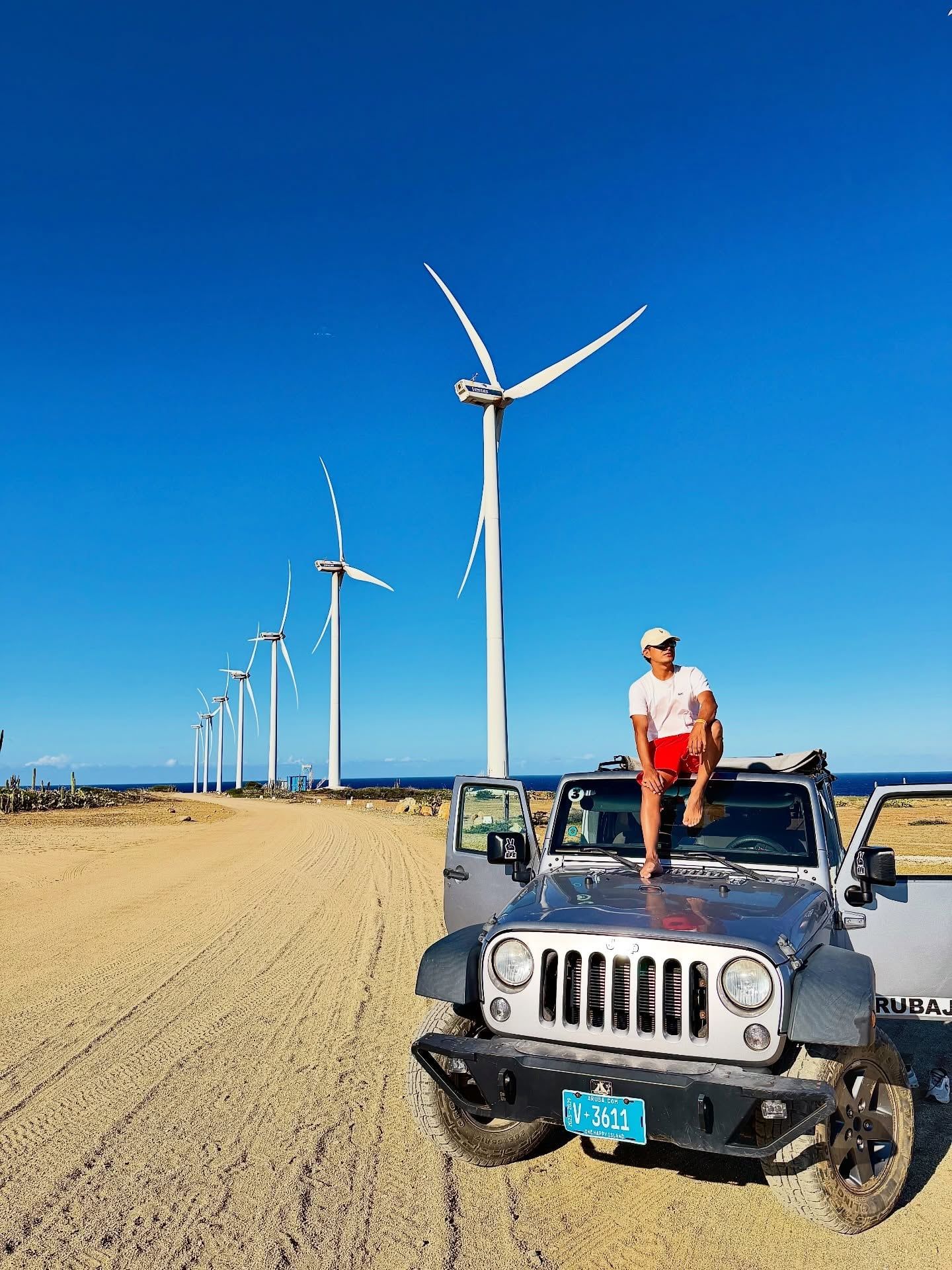
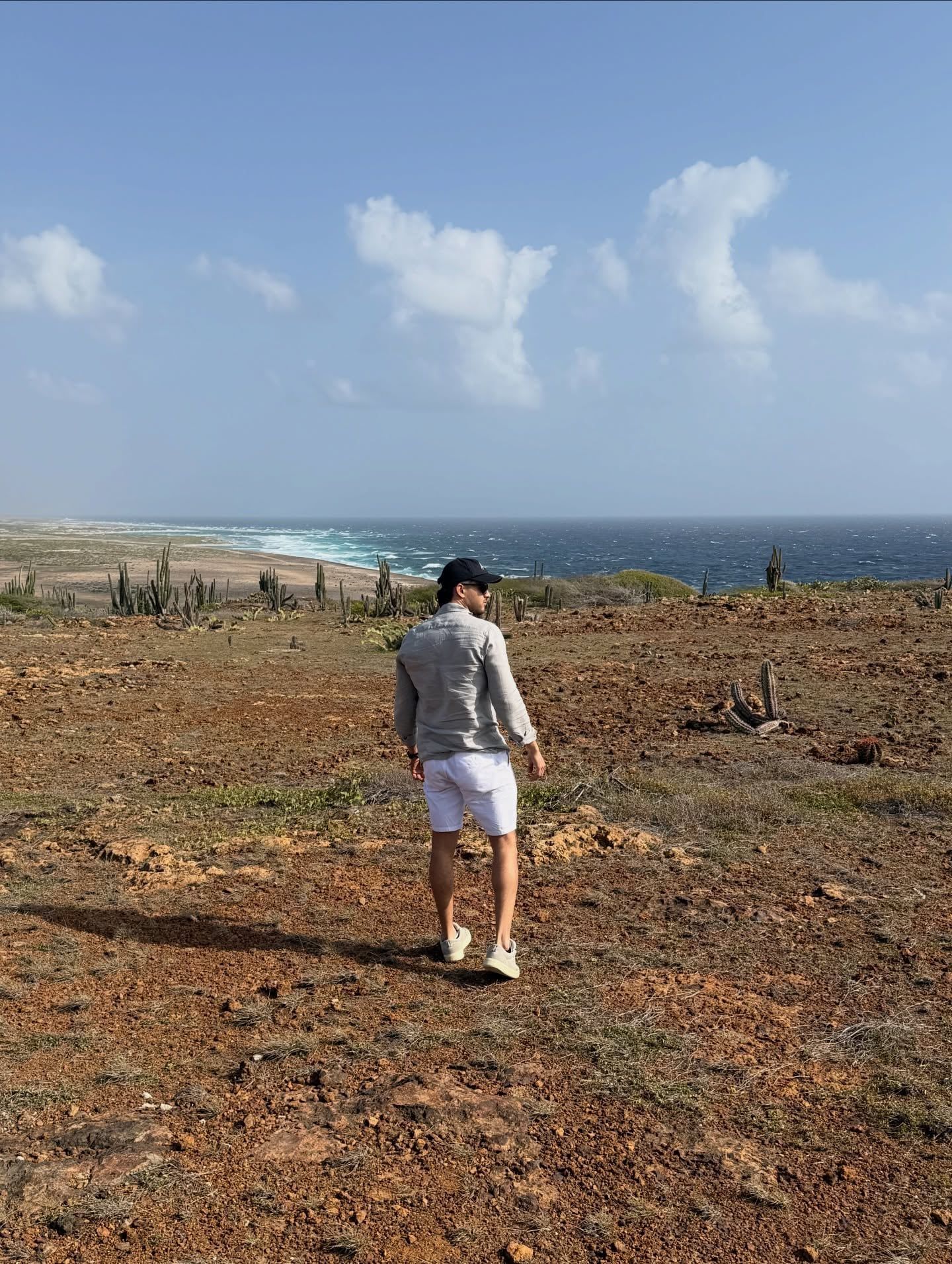
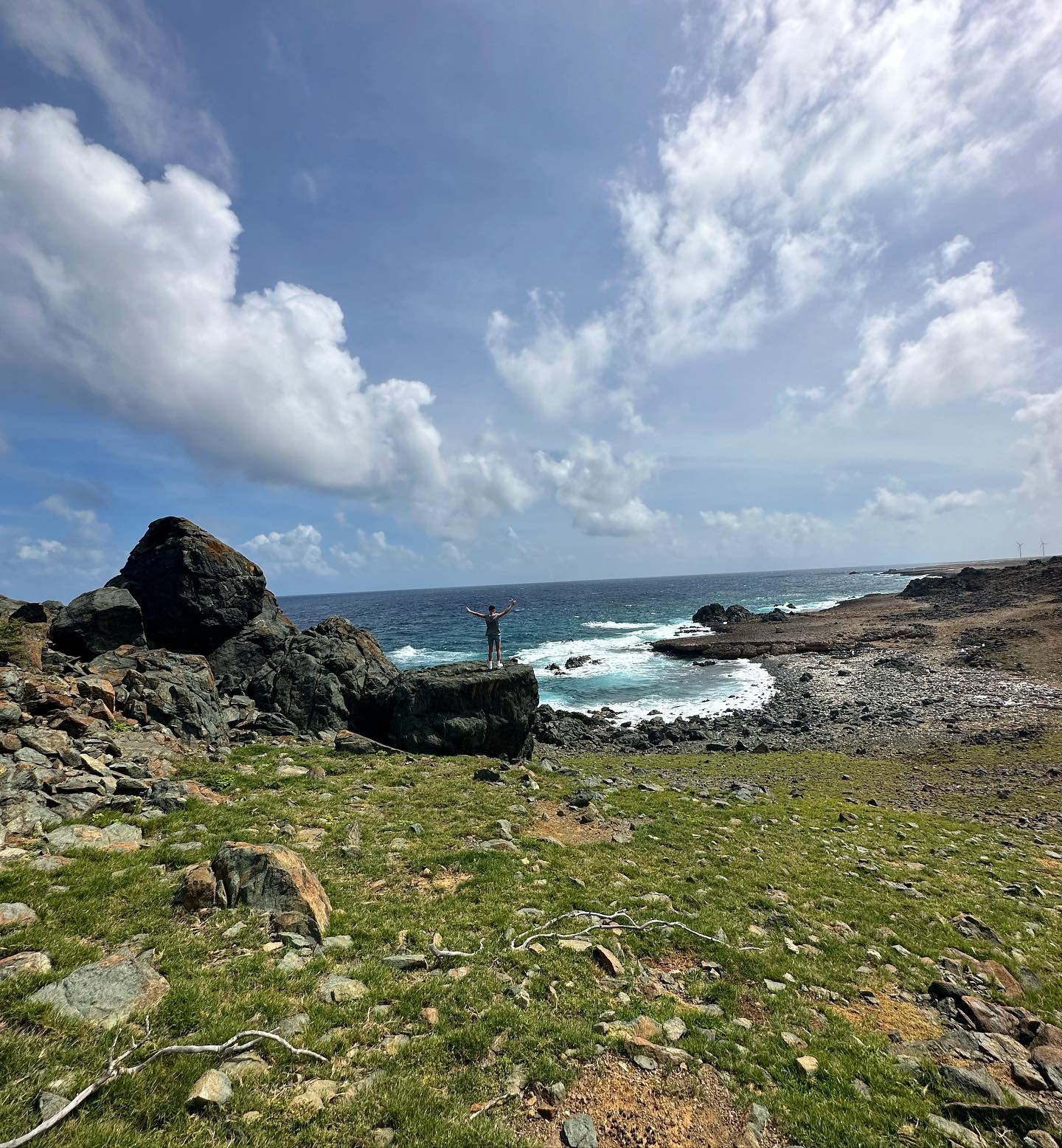
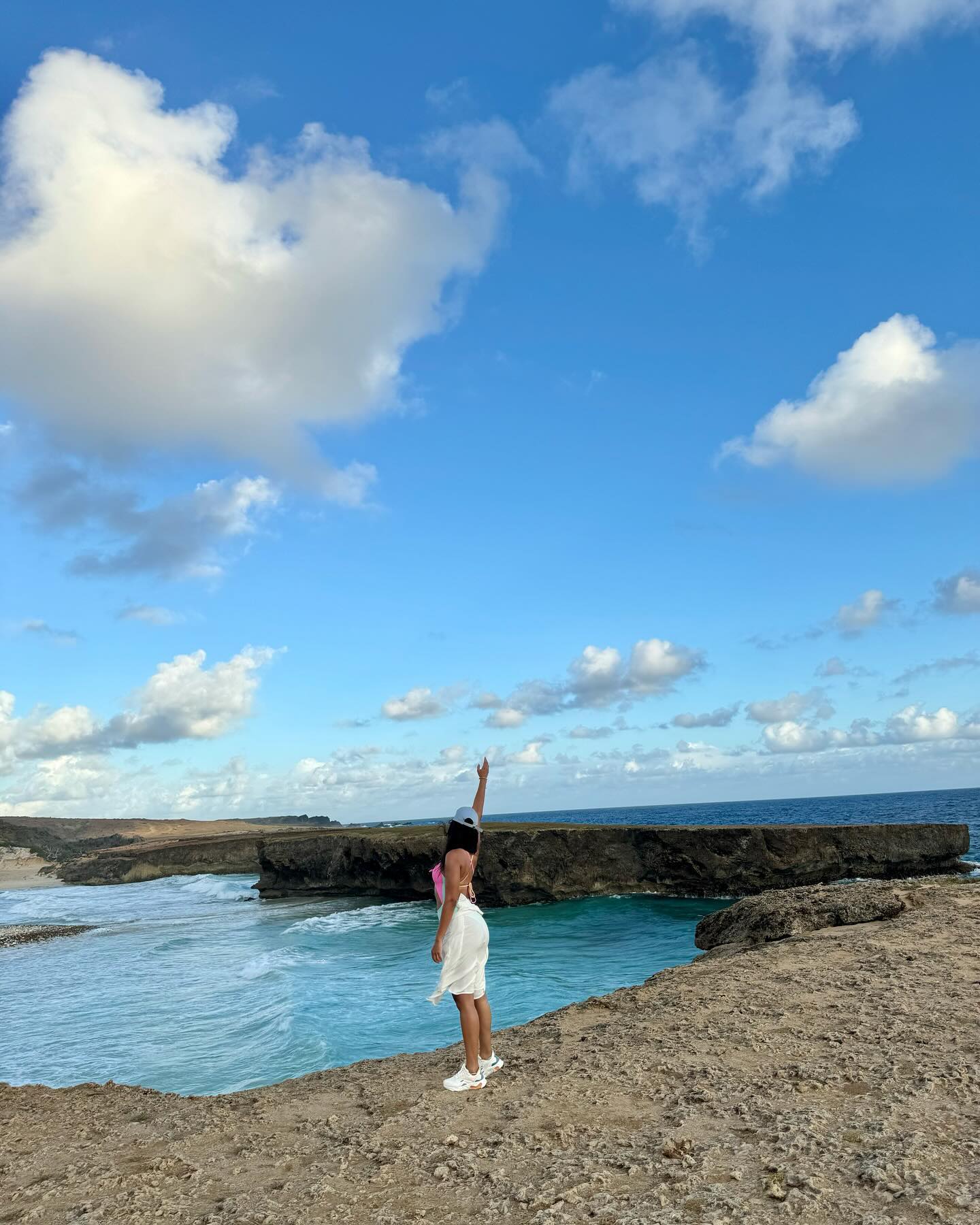
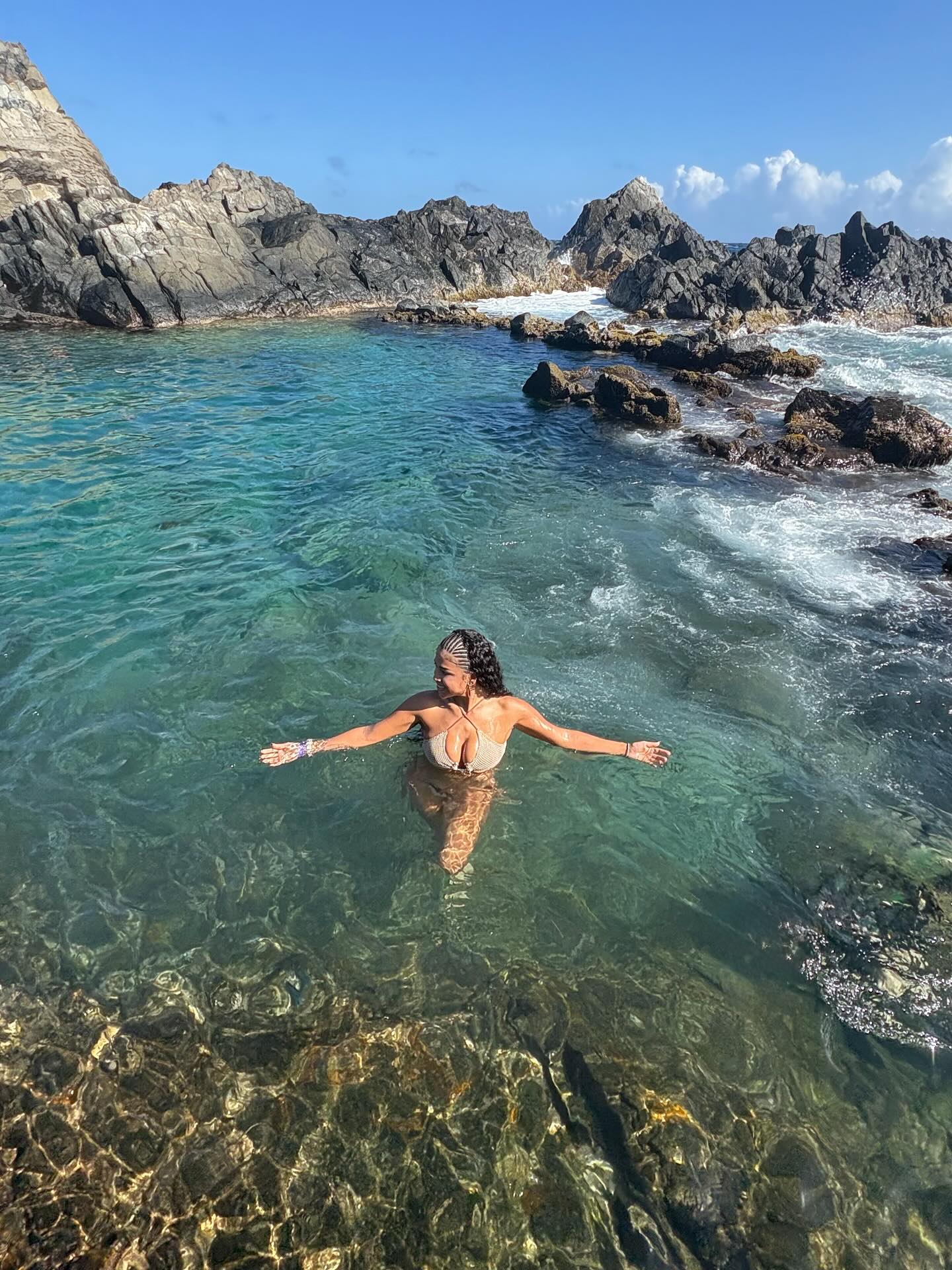
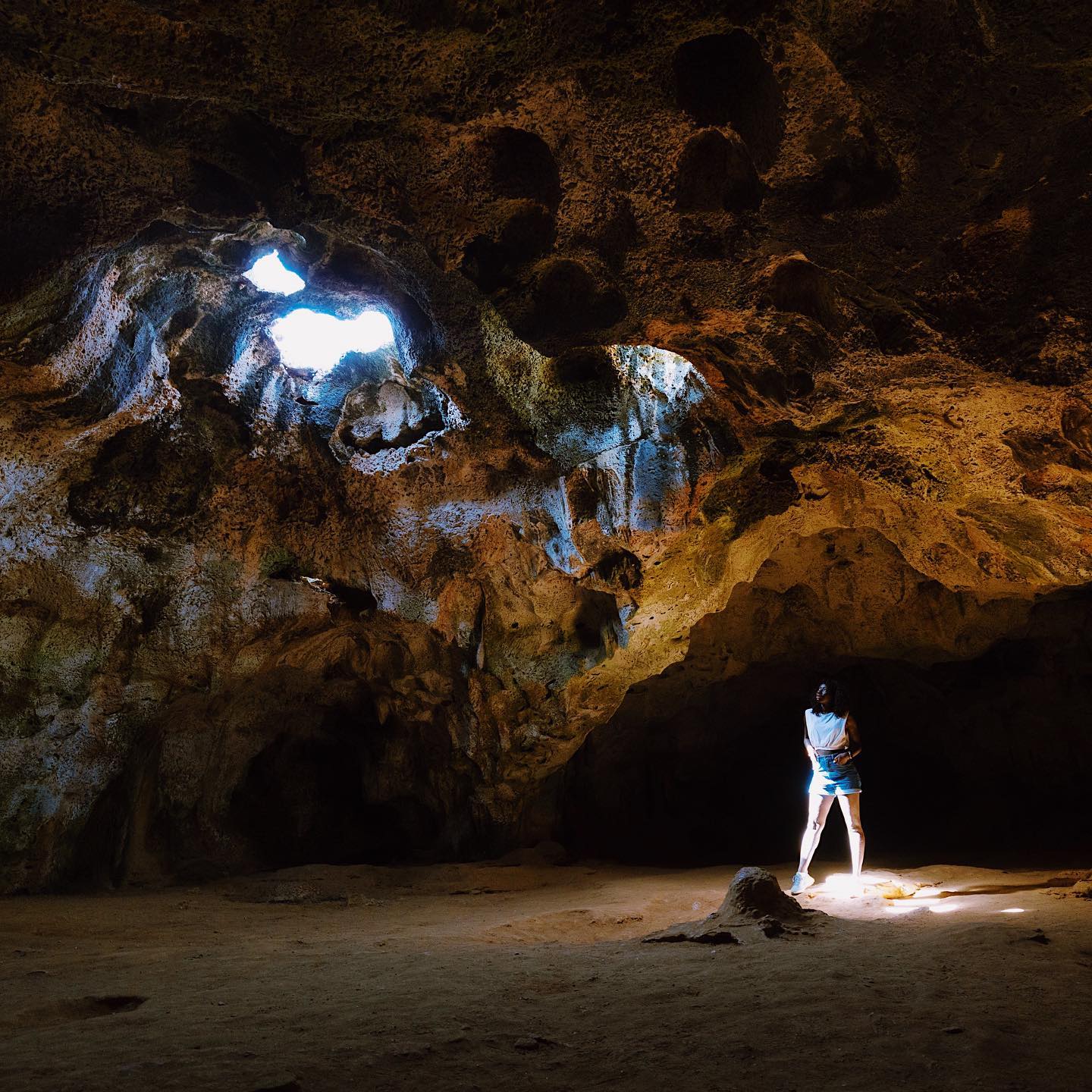
Most Arikok jeep tours spend two to five hours inside the park, riding open-air 4x4s over rocky trails to the Natural Pool (Conchi), the Fontein and Quadirikiri caves, and the windward coast. A local guide drives, so you're a passenger the whole way — expect washboard gullies, dust, and a swim stop when the sea cooperates.
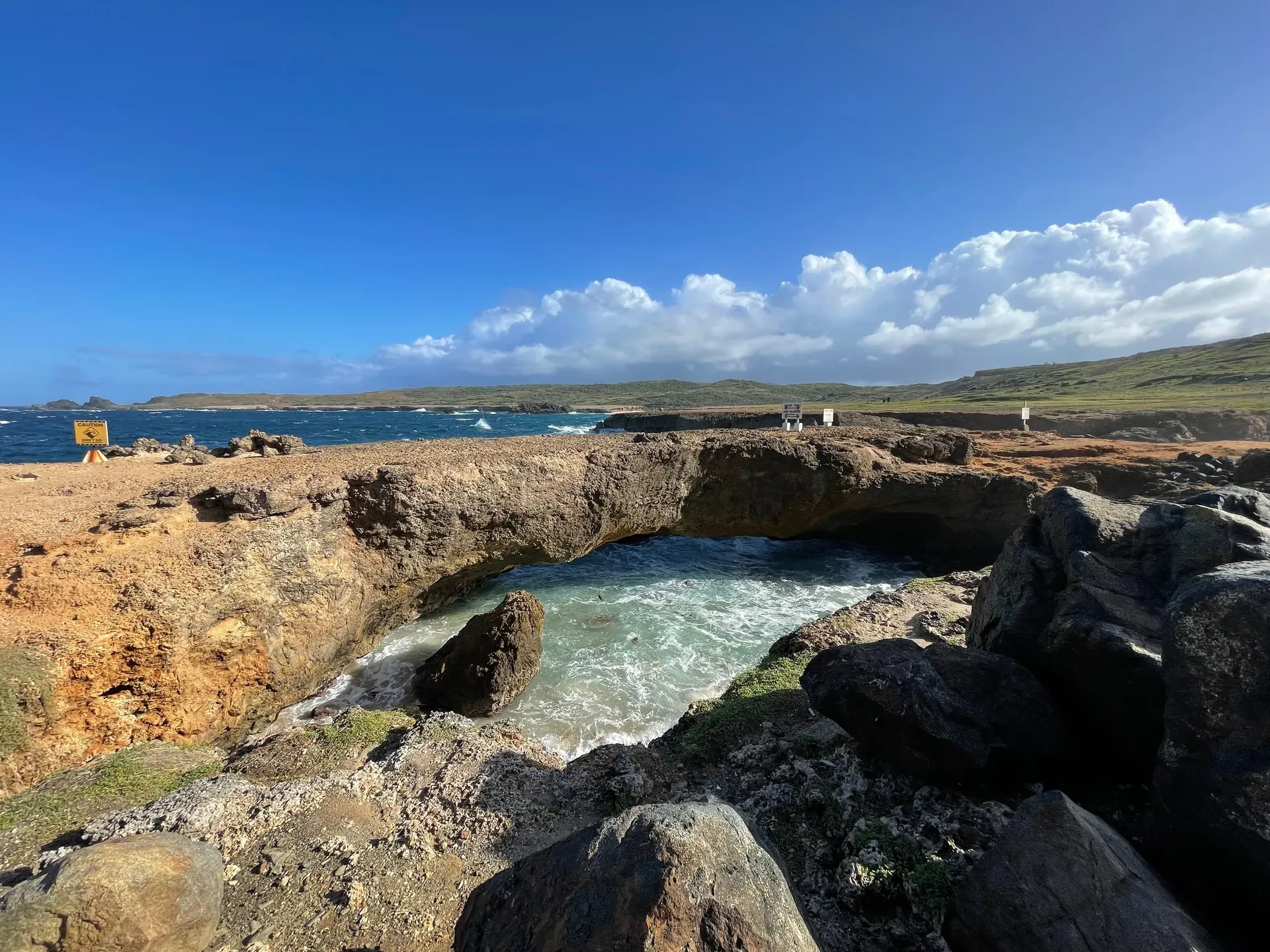
Conchi sits in a bowl of volcanic rock on the windward coast, holding ocean water that spills in over the rocks. You reach it by 4x4 track, then descend steep, narrow stairs. Bring water shoes — the surfaces are rocky, and rangers post advisories when swells make swimming unsafe.
The only cave in the park with pre-Columbian Arawak drawings on its ceilings, plus later marks from early European settlers. Access is gated and guided because of past graffiti. Rangers walk you under low overhangs and explain the red-brown pictographs.
About 100 feet of passage with two large chambers lit by sunlight streaming through holes in the roof — the park's signature photo. Hundreds of harmless bats roost in the darker sections. A ranger walks you in and points out where to duck under stalactites.
Two wild coves that rank among Aruba's most important sea turtle nesting sites — leatherbacks and greens come ashore depending on season. The surf is powerful, so this is a watching stop, not a swimming one. Some tours include it on the full park loop.
Trade winds carve these blowing sand dunes above a beach backed by cliffs, with a staircase down to the sand. Swimming here is strictly prohibited because of strong currents and large rocks. The park restaurant nearby is one of only two restroom stops in the park.
Several tours finish with a swim at Baby Beach on Aruba's southern tip, roughly an hour's drive from the park. It's a shallow, calm crescent — a deliberate contrast to the rough windward coast. Some routes add a drive through San Nicolas's mural district on the way back.
The seven tours on this page differ mainly in what's included and how rough you want the ride. Prices run from USD 78 to 450, and the park entrance fee is not always in the sticker price.
All options are guided — a driver-guide handles the 4x4 while you ride as a passenger. Group tours carry up to a full jeep caravan; one 6-hour option (USD 299) is a small-group jeep; and two fully private tours (USD 299–450) put the vehicle at your disposal. English is standard, with Dutch and Spanish on most departures.
The most popular tour has 9,696 reviews and a 4.96 rating — it fills up, especially in the February–April high season. Morning departures sell out first. Cancel at least 24 hours before departure for a full refund; that's the standard policy across every operator here.
The Arikok day-pass costs USD 22 for adults (under-17s free), but some tours leave it out and charge you at check-in — one operator adds USD 25 per person on the day. Four of the seven tours include the entrance ticket in the price. Do the math before comparing sticker prices.
Every operator flags the same things: not recommended for travelers with spinal injuries, pregnancy, or poor cardiovascular health. The track to Conchi bounces over dozens of low rocky gullies. If you get motion-sick easily, sit up front and take the morning departure.
One tour bans children under 5 outright, and another won't take kids under 4 or allow lap-seating. The Natural Pool Safari offers specialized infant seats. Cruise passengers should note one operator cannot accept Carnival cruise ship guests at all.
Several itineraries pair the park with sights outside its gates: Baby Beach, Alto Vista Chapel, the Natural Bridge ruins, and San Nicolas's murals. If you're self-driving later, Ayo Rock Formations (2.8 mi away) and Casibari's boulders make an easy second stop.
Jeep tours suit elderly visitors better than self-driving, since someone else handles the rough roads. Cave floors are uneven and the pool stairs are steep and narrow, so a moderate fitness level is the usual requirement. Wheelchair-accessible van tours of the north coast exist — confirm cave access with the operator before booking.
Swimsuit, towel, sunscreen, and water shoes for the pool. The park is shadeless with highs around 87°F (31°C) year-round. Some tours hand out snorkel gear; one asks you to bring a reusable bottle for ice-water refills instead of plastic.
Swipe to see more
| Natural Pool & Cave Safari (most popular) | Full-Park Loop Jeep Safari | Park + Baby Beach Combo | Small-Group / Private Jeep | |
|---|---|---|---|---|
| Duration | 4h 30min, morning only | 4h 30min, three departure windows | 4h–5h | 4h 45min–6h |
| Price from (USD) | 99 | 109 | 78–95 | 299–450 |
| Park fee | Not included — USD 25 charged at check-in | Included, with all fees and taxes | Included on both options | Included on the 6h tour |
| Best for | First-timers who want the classic Conchi run with lunch and 9,600+ reviews behind it | Travelers who want caves, Dos Playa and Conchi in one loop — the most park per dollar | Families and swimmers who want a calm-water finale after the rugged coast | Couples and groups who want the pace set by themselves, with a pastechi breakfast included on the 6h version |
Swipe to see more
Open daily. The San Fuego entrance and Visitor Center run 8:00 am–3:30 pm; the Vader Piet entrance runs 8:30 am–3:00 pm. These are the official Aruba Conservation Foundation hours.
Some listings on TripAdvisor and US News still show 8 am–4 pm — that's outdated. Arrive early regardless: cave visits and ranger tours wind down well before the posted closing times.
Jeep tours typically start between 7:45 and 8:25 am for morning departures, with some operators offering mid-day and late-afternoon options around 12:00 pm and 2:00 pm.
By rental car: from Oranjestad or the airport, take Sasakiweg → A1 → Route 4 in Paradera → Arikokweg to the San Fuego entrance (San Fuego 70, Santa Cruz). Under 40 minutes from the Noord hotel zone; about 30 from Eagle Beach. A 2WD reaches the caves and viewpoints, but the Conchi track requires a 4x4 — and standard rental insurance usually excludes damage on unpaved park trails.
By taxi: around 30 minutes from Eagle Beach, roughly USD 30 from Noord. Fares are unmetered — agree on the price before departure and arrange your return pickup, since ride options near the gate are scarce. Arubus buses don't reach the park.
By jeep tour: pickup from most island hotels, about 4–6 hours door to door. Cruise passengers must book through the cruise line rather than independently, per Lonely Planet.
Inside the park, ATVs, UTVs and motorbikes are banned. You travel by licensed 4x4, on foot, or on horseback.
February through April is the sweet spot — March is Aruba's driest month (about 0.6 in / 15 mm of rain) with daytime temperatures around 87°F (31°C). April–August brings fewer crowds and lower hotel rates with warm weather intact.
Go early in the day. Before 10 am the trails are coolest, jeep and UTV tour groups haven't yet clogged the cave parking areas, and rangers can still advise on sea conditions at Conchi. Early light also makes Quadirikiri's sun shafts and the Boca Prins dunes far better photos.
October–January is the rainy season — November averages about 3.8 in (98 mm) — which can leave the dirt tracks muddy and complicate 4x4 runs to the Natural Pool. Rain tends to fall in short bursts rather than all-day washouts. Aruba sits outside the hurricane belt, so the park stays open year-round. Skip midday visits June–September: the shadeless trails are punishing.
Wheelchair access is limited to the Visitor Center area — the paved path between the San Fuego car park and the Visitor Center works; the trails, caves, Natural Pool stairs and beaches do not. Wheelchair-accessible van tours of the north coast exist, but confirm cave access with operators in advance.
For seniors and less mobile visitors, a guided jeep tour beats self-driving: park tracks bounce over dozens of low rocky gullies. Two ranger hikes are rated easy and manageable for reasonably fit seniors — Cunucu Arikok (5 km, 1.5 hr) and Miralamar (2 km, 1.5 hr). Skip Jamanota Hill (4.8 km, rated hard).
Families do well here. Kids love the cave tours, the light shafts in Quadirikiri, and the roaming donkeys and goats. Terrain isn't stroller-friendly — carry small children, and keep everyone well back from the surf line, which is unfenced. Note the age rules: one tour won't take children under 5, another caps it at 4.
Restrooms exist in exactly two places: the San Fuego Visitor Center and the park restaurant between Boca Prins and the Fontein caves. Plan water and food around that if you're heading deep into the park or hiking the southern trails.
There is almost no shade anywhere in the park. Carry 2–3 liters of water per person on hiking days, plus hats and sunscreen. Some jeep tours supply ice water and snacks; one asks you to bring a reusable bottle for refills. Sturdy closed shoes are essential for the caves — flip-flops won't survive the uneven floors.
The park is protected under Ministerial Order AB 2000 no. 59, and violations draw fines up to USD 100,000. That covers drones, littering, rock stacking, collecting or disturbing any plant or animal, off-road driving, and entering restricted areas.
Personal photography is unrestricted, and the Quadirikiri light shafts and Conchi are the signature shots — but keep the drone packed away. Commercial filming needs advance arrangement with the Aruba Conservation Foundation. Watch where you step and place your hands: the endangered cascabel rattlesnake lives in the rocky terrain.
Sometimes. Four of the seven tours here include the USD 22 day-pass in the price, while others list it as an exclusion — one operator charges USD 25 per person at check-in. Check the inclusions list before comparing prices, or bring cash for the gate.
Rough. The track to Conchi crosses dozens of low rocky gullies, and operators themselves warn against the ride if you have spinal injuries, are pregnant, or have poor cardiovascular health. Most people consider it part of the fun, but motion-sickness sufferers should take the morning departure and sit up front.
Yes, when the sea is calm — Conchi holds ocean water behind a ring of volcanic rock, and tour guides lead you down steep, narrow stairs for a swim. When swells rise, waves crash over the rocks and rangers post advisories against swimming. Bring water shoes; the surfaces are rocky.
Group tours (USD 78–109) put you in an open-air 4x4 or safari truck with other passengers and a set itinerary lasting 4–5 hours. The private options run USD 299–450 for roughly 5–6 hours, with pickup at your accommodation, your own pace, and on the 6-hour version a pastechi breakfast included.
It depends on the operator. One tour doesn't allow children under 5, another bans kids under 4 and doesn't permit lap-seating, while the Natural Pool Safari offers specialized infant seats. Kids generally love the caves, the sun shafts in Quadirikiri, and the donkeys and goats roaming the park.
Most do. Typical hotel pickup windows are 7:45–8:25 am for morning tours, often right outside the lobby; Airbnb guests usually self-drive to the operator's office. Cruise passengers get picked up outside the main port gate near Ocean Drive store — though one operator cannot take Carnival cruise ship guests, and cruise arrivals generally must book through the cruise line.
Book at least a few days ahead in high season — the most popular tour has nearly 10,000 reviews and a 4.96 rating, and morning departures fill first. All operators here offer a full refund if you cancel at least 24 hours before departure, so booking early carries little risk.
Most itineraries stop at Fontein Cave, the only one with pre-Columbian Arawak drawings on its ceilings, and Quadirikiri Cave, where sunlight pours through holes in the roof of two large chambers and bats roost in the darker sections. The full-park loop tour covers both plus Dos Playa beach. Access to Fontein is gated and guided because of past graffiti.
Sturdy closed shoes for the caves, a swimsuit, towel, and water shoes for the Natural Pool. The park is shadeless with highs around 87°F (31°C) year-round, so sunscreen and a hat are non-negotiable. Some operators supply snorkel gear, snacks and ice water — one asks you to bring a reusable bottle for refills.
Yes, with limits. A standard 2WD rental reaches the main caves and viewpoints on paved and well-maintained gravel roads, but the Conchi track requires a 4x4 — and standard rental insurance usually excludes damage on unpaved park trails. ATVs, UTVs and motorbikes are banned inside the park entirely.
Browse verified tours with free cancellation and instant confirmation.
Find Tours


A 4.5-hour morning jeep safari built around the Natural Pool (Conchi) inside Arikok National Park. You ride as a passenger in an open-air 4x4 Land Cruiser in a caravan, with a local guide doing the driving in English, Dutch or Spanish. The pool sits in a bowl of volcanic rock that blocks the big waves; when conditions allow, there's time to swim and snorkel, with equipment provided. The route runs roughly 30 minutes at the start and end point, a 20-minute stop at the Ayo and Casibari rock formations, about two hours inside Arikok, and a full hour at the Natural Pool. Other stops along the way include Dos Playa Beach, the Indian Caves, Fontein Garden and the rock formation. Lunch is included on the morning tour, plus ice water — bring a reusable bottle to refill. Gratuities and the Arikok National Park entrance fee aren't included. Cancel at least 24 hours before departure for a full refund; for after-hours questions, call +297 592 4600.
For a full refund, cancel at least 24 hours before the scheduled departure time.
English, Dutch, Spanish


This 4.5-hour jeep tour runs from Arikok National Park to the Natural Pool, then to Fontein Cave, and finishes with a swim stop at Baby Beach on Aruba's southern tip. Inside the park you'll ride rocky 4x4 trails for about 30-45 minutes to reach the Natural Pool, a rock formation that holds ocean water like a basin. You get 30 minutes there for a dip before the drive onward. Fontein Cave gets the longest stop at 45 minutes. Inside are ancient Indian drawings, and the tour includes a fish pedicure — small fish nibbling at your feet in the cave's pool. From there it's roughly a 30-minute drive to Baby Beach, where you get 30 minutes in the shallow water before the return leg. An experienced driver-guide leads the tour in English, and ice-water refills are included; bring your own canteen, since the operator skips single-use bottles. Park entrance is not included in the price. Pickup is at your resort's main lobby, or from your Airbnb by calling the office to arrange pickup or self-drive. Look for a big white bus with green waves and the Fofoti Tours logo, or a green safari truck. Cancel at least 24 hours ahead for a full refund.
For a full refund, cancel at least 24 hours before the scheduled departure time.
English


A 4-hour jeep run that starts with waiver-signing at the operator's office at Aruba Waterpark (Orguyo 60) and spends most of its time — about two hours — inside Arikok National Park. You ride as a passenger: a guide drives and narrates in English, Dutch, or Spanish. The main stop is the Natural Pool (Conchi), a tidal lagoon protected from the open sea, where you get 35 minutes and snorkel gear to swim with tropical fish. Other stops include the Indian Caves, a fish pedicure, and 30 minutes at Baby Beach (Klein Lagoen), a shallow sheltered lagoon at the island's southeastern end, for swimming and more snorkeling. Hotel or cruise-port pickup and drop-off is free — you fill in your location when booking. Morning pickup runs 8:00–8:25 AM, afternoon 1:00–1:25 PM. Included are the guide, bottled water, snacks, park fees, and snorkel equipment. Cancel at least 24 hours ahead for a full refund.
For a full refund, cancel at least 24 hours before the scheduled departure time.
English, Dutch, Spanish


This 4-hour-30-minute morning Jeep safari covers the whole park in one loop: Natural Pool (Conchi), Dos Playa beach, and the Fontein and Quadirikiri limestone caves. It starts with a freshly made pastechi, then heads up the rugged 4x4 trail to the Natural Pool, where volcanic rock meets the sea. If the park rangers have the pool open and the water is calm, you get 45 minutes to swim and snorkel — cliff jumping is possible too. When it's rough, you stay on the rocks and watch the waves instead. From there the route runs along the coastline to Dos Playa for a short beach walk, then to the caves. Quadirikiri has two sunholes lighting up the limestone (10-minute stop, and the guide points out the best photo spots). Fontein holds Caiquetio drawings more than 1,000 years old, plus a freshwater pond — 15 minutes there. Guides run the tour in English, Dutch, or Spanish and cover Aruba's history and geography along the way. Included: bottled water, snorkel and mask, the Arikok entrance ticket, and all fees and taxes. Pickup runs between 7:20am and 7:40am outside your hotel lobby (contact the operator to confirm the exact time). The same company also runs a midday tour (Boca Prins and caves only) and a late-afternoon departure, but only this morning version visits the Natural Pool. Cancel at least 24 hours ahead for a full refund.
For a full refund, cancel at least 24 hours before the scheduled departure time.
English, Dutch, Spanish


A 5-hour open-air safari truck tour that hits Arikok's visitor center, the Natural Pool, a limestone cave, and Baby Beach, with a swim at the last stop and a drive through San Nicolas's mural district on the way back to Oranjestad. After a 15-minute stop at the park visitor center, you get 20 minutes at the Natural Pool — a seawater basin ringed by volcanic rock near the coast. Next is a 20-minute stop at the limestone cave, which has Indian drawings about a thousand years old and a fish pedicure in the Fontein pond. Then 30 minutes of swimming in Baby Beach's shallow water. The San Nicolas drive-by at the end is from the truck, not a stop. A local guide (English or Spanish) does all the driving. Included: bottled water, snacks, pickup and drop-off, and the national park entrance fee. Lunch and gratuities are extra. Cruise passengers are picked up outside terminal gate 5, 30 meters to the right, in front of the Ocean Drive store (blue wall, yellow logo). Cancel at least 24 hours ahead for a full refund.
For a full refund, cancel at least 24 hours before the scheduled departure time.
English, Spanish


Six hours in an open-air 4x4 jeep, roughly half of it off-road inside the park. Pickup is at 7:20-7:30 outside your hotel lobby (non-hotel guests can arrange an alternative pickup by contacting the operator), and the day starts with a pastechi breakfast snack from a local family shack — included, along with bottled water and snorkel gear. The Arikok entrance ticket and all taxes are covered; lunch is not, so bring money or snacks for later. Inside the park, about 3.5 hours of driving and stops: the Natural Pool "Conchi" (45 minutes, with swimming and snorkeling if the sea isn't too rough), Dos Playa beach (15 minutes), the Indian Caves with paintings by the Caiquetios — the island's first inhabitants — where Fontein Cave also has a wild fish pedicure, and a second cave with sunlit chambers that photograph well. After the park, the route runs through San Nicolas so you pass the street-art murals on the way to Baby Beach, where you get another 45 minutes to snorkel inside the reef. You can ask to do Baby Beach first instead. Guides speak English, Dutch, and Spanish. Cancel at least 24 hours before departure for a full refund.
For a full refund, cancel at least 24 hours before the scheduled departure time.
English, Dutch, Spanish


A private jeep, yours alone, for 4 hours 45 minutes — this is the tour for people who want the park's rough terrain handled without joining a group. The driver-guide speaks English or Spanish and picks you up directly at your resort lobby or accommodation. Bring nothing but a swimsuit and a towel. The route packs in six stops. Two hours inside the park itself, then 45 minutes at the Natural Pool, a calm basin ringed by volcanic rock where swimming is the whole point. From there it's 15 minutes at the dunes and beach of Boca Prins, 30 minutes at Fontein Cave — home to bats and a fish pedicure, where small fish nibble the dead skin off your feet — and 20 minutes at Guadirikiri Cave, the best known of Aruba's caves. The last stop is Baby Beach: 45 minutes in shallow, clear water that's easy for hesitant swimmers. Water and soda are included; meals are not, so eat before pickup. Cancel at least 24 hours ahead for a full refund.
For a full refund, cancel at least 24 hours before the scheduled departure time.
English, Spanish