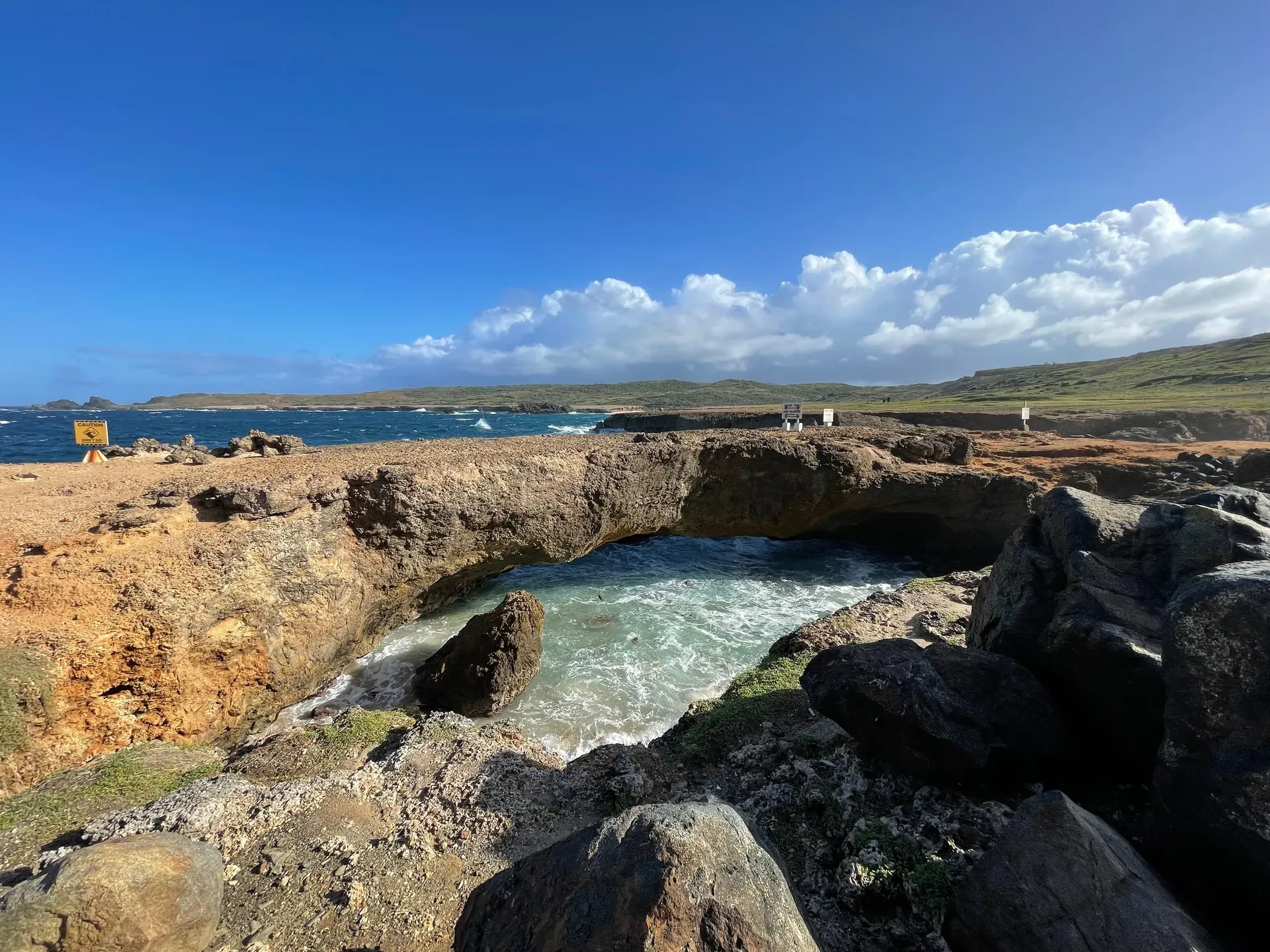
Arikok National Park covers 34 square kilometers of Aruba's northeast coast — a fifth of the whole island — where sunlight pours through holes in the roof of Quadirikiri Cave, sea turtles nest at Dos Playa, and a 4x4 track ends at Conchi, a swimming pool ringed by volcanic rock. Entry is USD 22 for adults, kids under 17 get in free, and rangers lead guided hikes up Jamanota, at 188 meters the highest point in Aruba.
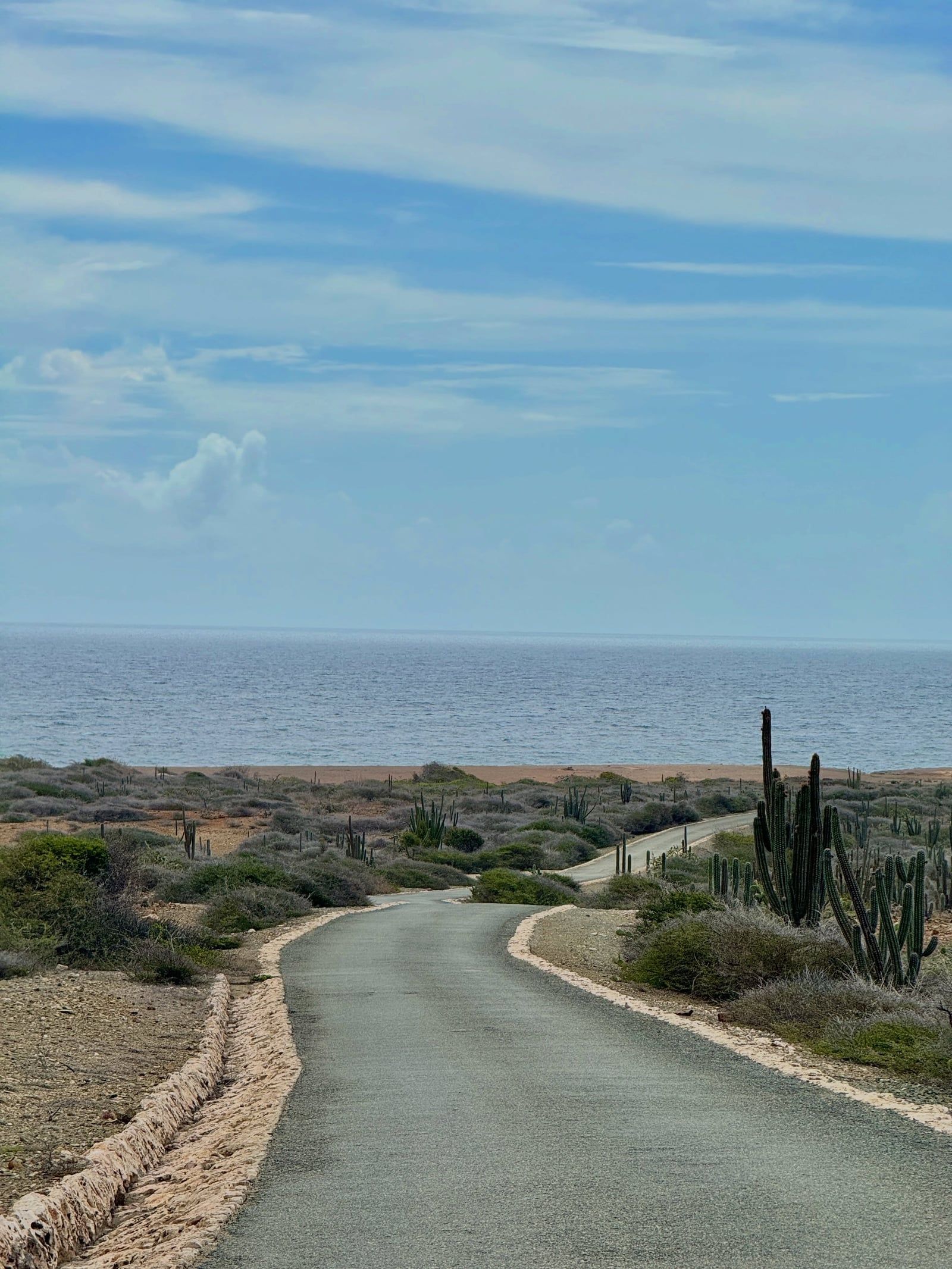
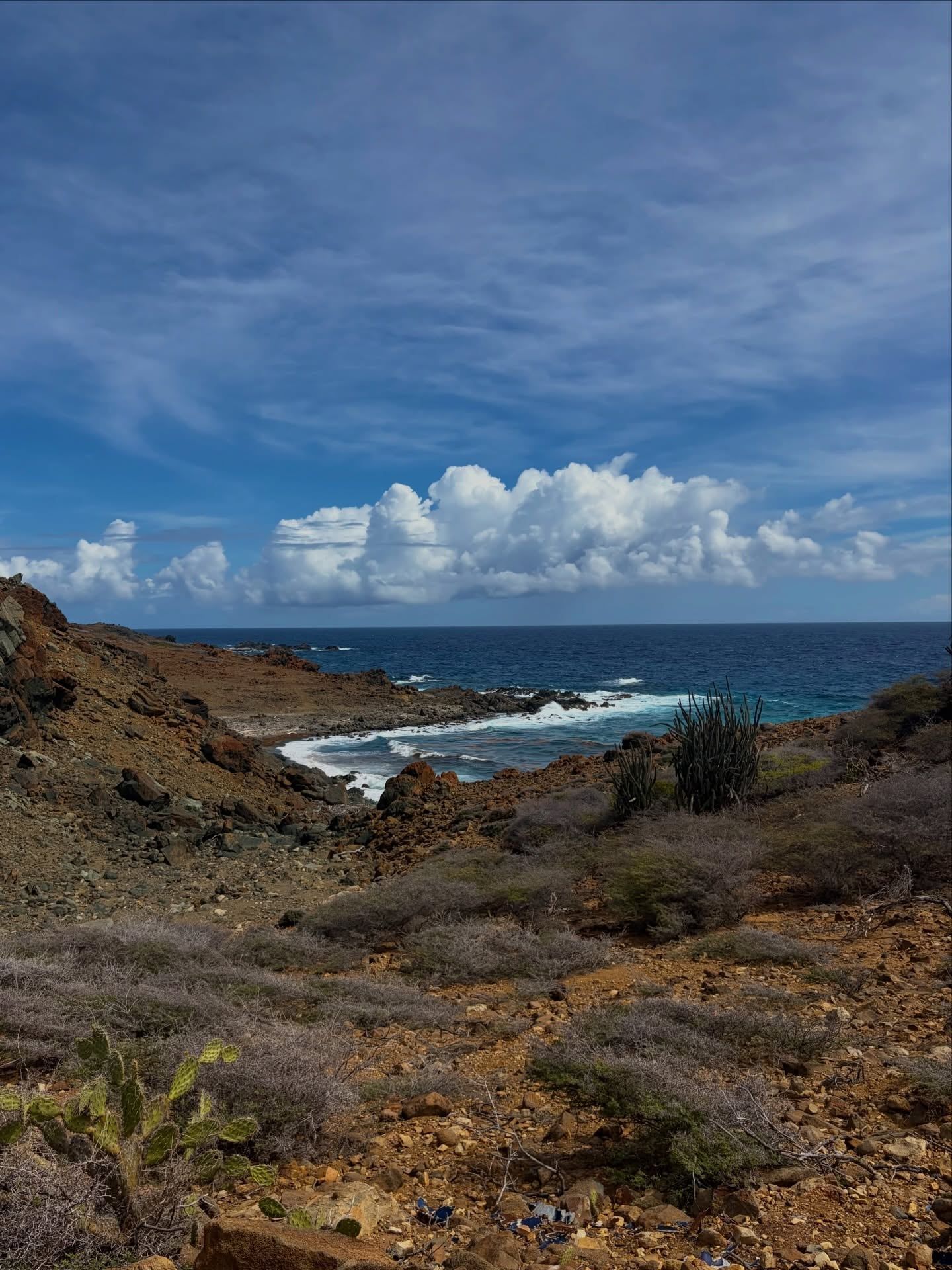
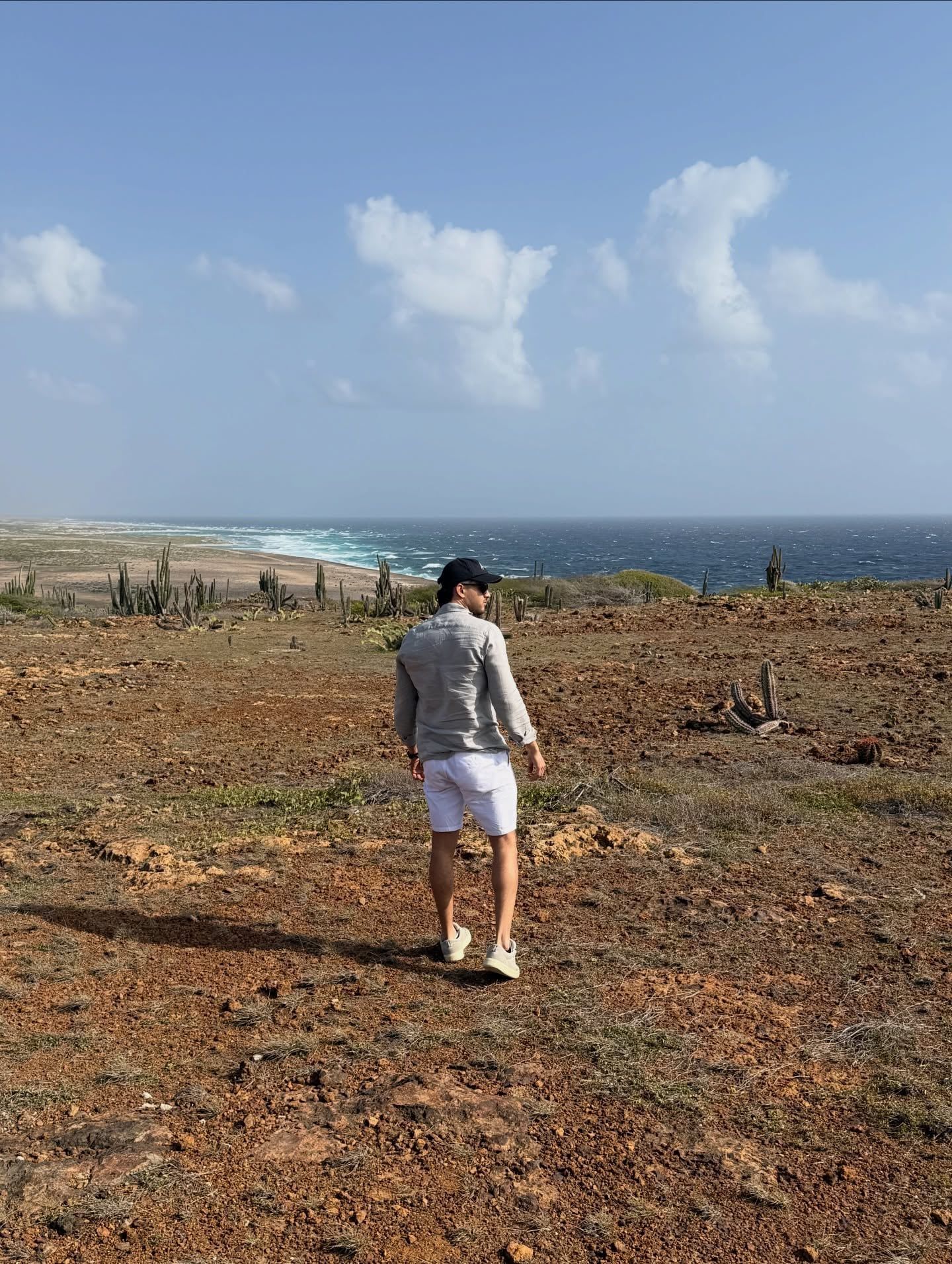
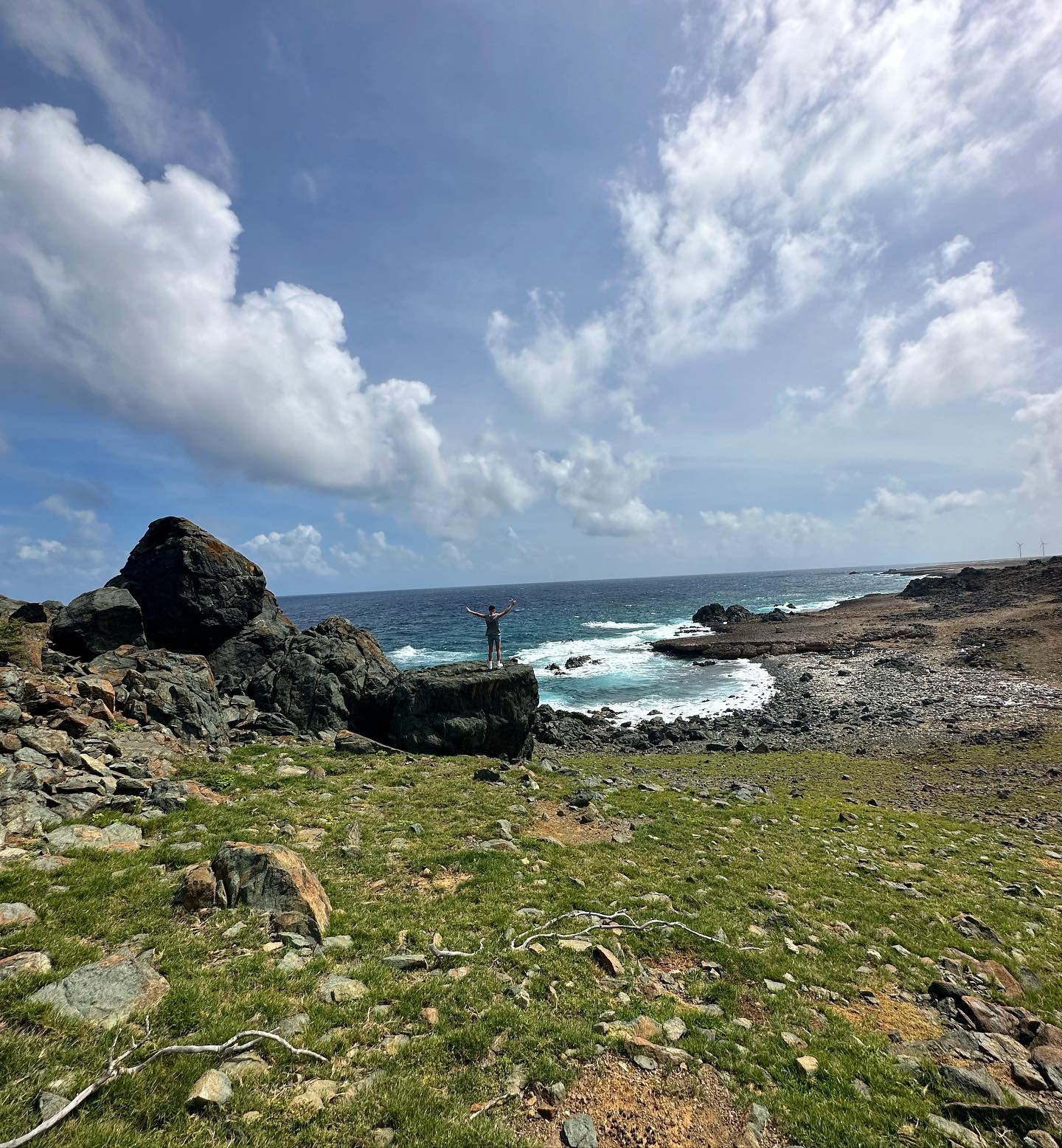
Find Guided ToursArikok National Park covers roughly 34 square kilometers (7,907 acres) of Aruba's northeastern coast — about 20% of the island — which makes it one of the largest protected areas in the Dutch Caribbean. The terrain is desert: cacti, wind-bent divi-divi trees, limestone terraces and dry gullies called roois, all carved by constant trade winds. Two hills anchor it: Seroe Jamanota, at 188 m (617 ft) the highest point in Aruba, and the park's namesake, Arikok, at 185 m (606 ft).
Three geological formations stack up inside the park. The oldest is the Aruba Lava Formation, volcanic rock from the island's earliest days. Above it sits the Aruba Batholith, a mass of quartz diorite cut by more than 20 quartz-gold veins — the seams miners chased at Miralamar until the mine closed in 1916. Limestone terraces, the youngest layer, cap the coastal plateaus and hide the caves, including Quadirikiri, where sunlight drops through holes in the roof, and Fontein, the only cave with pre-Columbian Arawak drawings on its ceiling.
The park took decades to become official. Talks began in the late 1960s, a 1980 plan for the Arikok-Jamanota area produced the small Cunucu Arikok reserve around a restored adobe farmhouse, and the government passed nature-protection measures in 1995 and 1996. Arikok National Park was finally established by Ministerial Order in 2000; since 2003 it has been run by the Aruba Conservation Foundation.
Today the park shelters animals found almost nowhere else — the endangered Aruba Island rattlesnake (cascabel), the kododo blauw whiptail lizard, the shoco burrowing owl and the prikichi parakeet — alongside sea-turtle nesting beaches at Dos Playa and the restored cas di torto farmhouse of the old Arie Kok plantation that gave the park its name. Bring sturdy shoes. Almost none of it has shade.
Discover the full history and cultural significance on our About page.
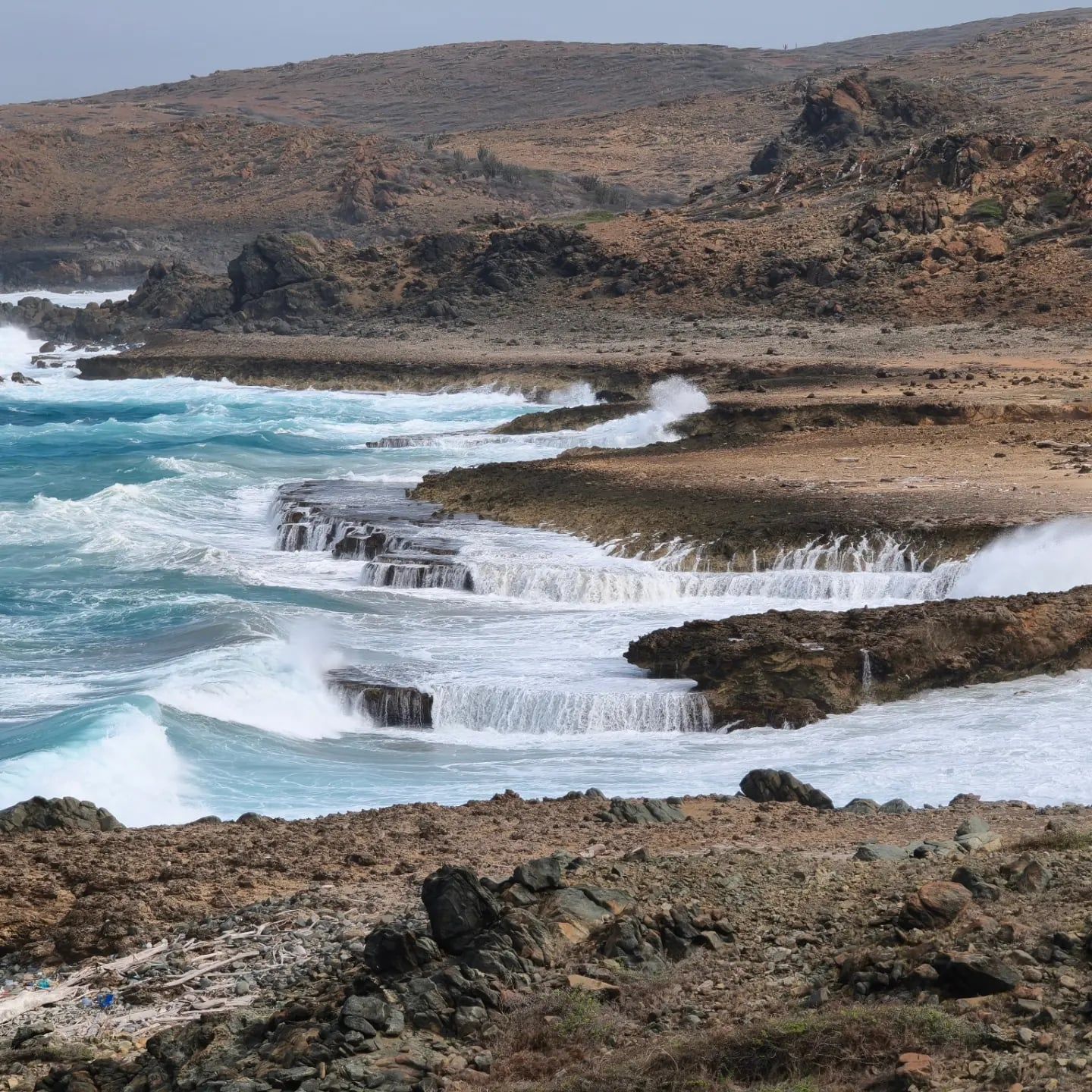
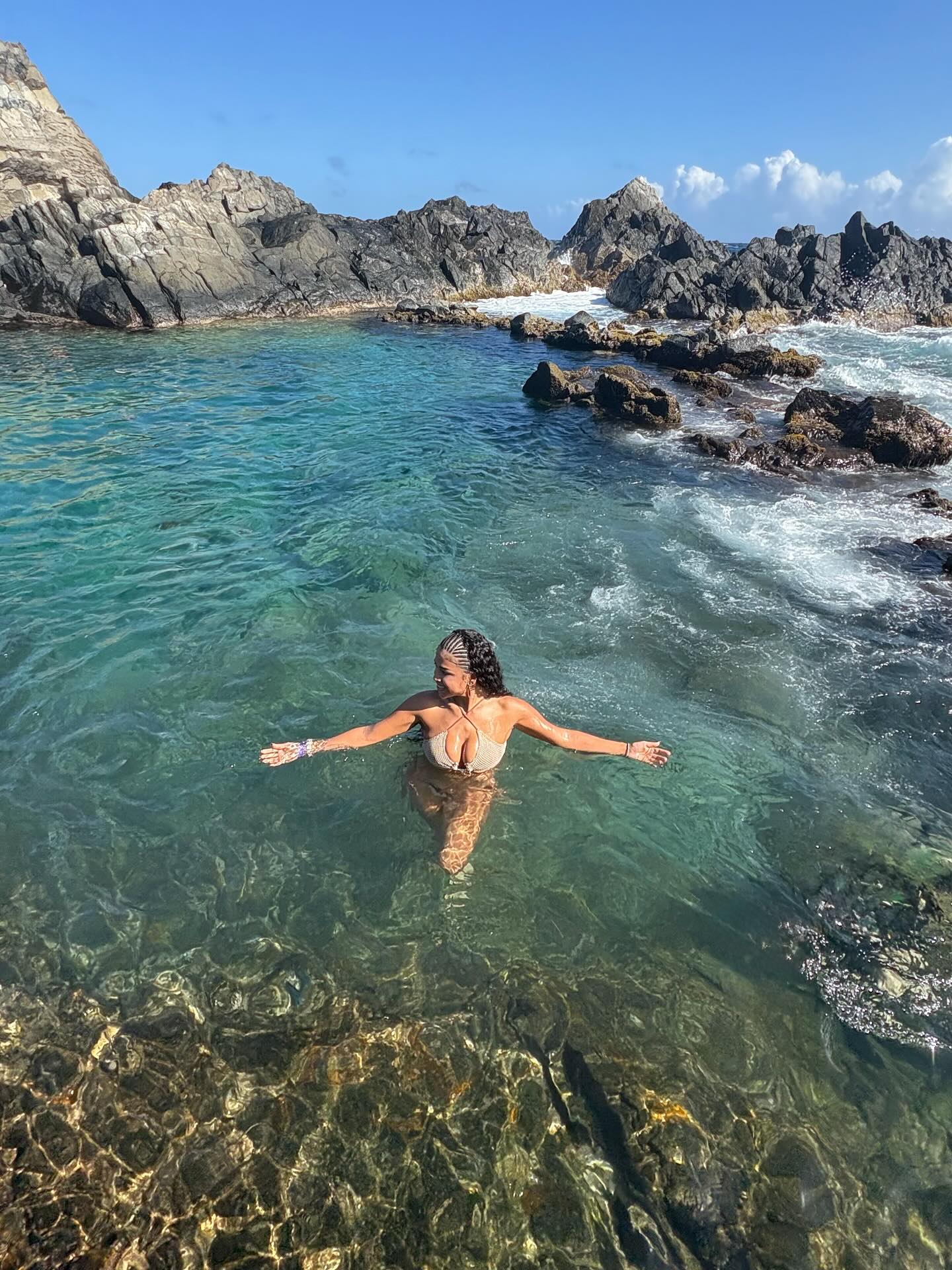
Conchi is a pool of sheltered seawater ringed by volcanic rock, reachable only by 4x4, tour, horseback or a long hike, then a descent down steep, narrow stairs. On calm days the water is magical. When swells rise, waves crash right over the rocks and rangers post no-swim advisories.
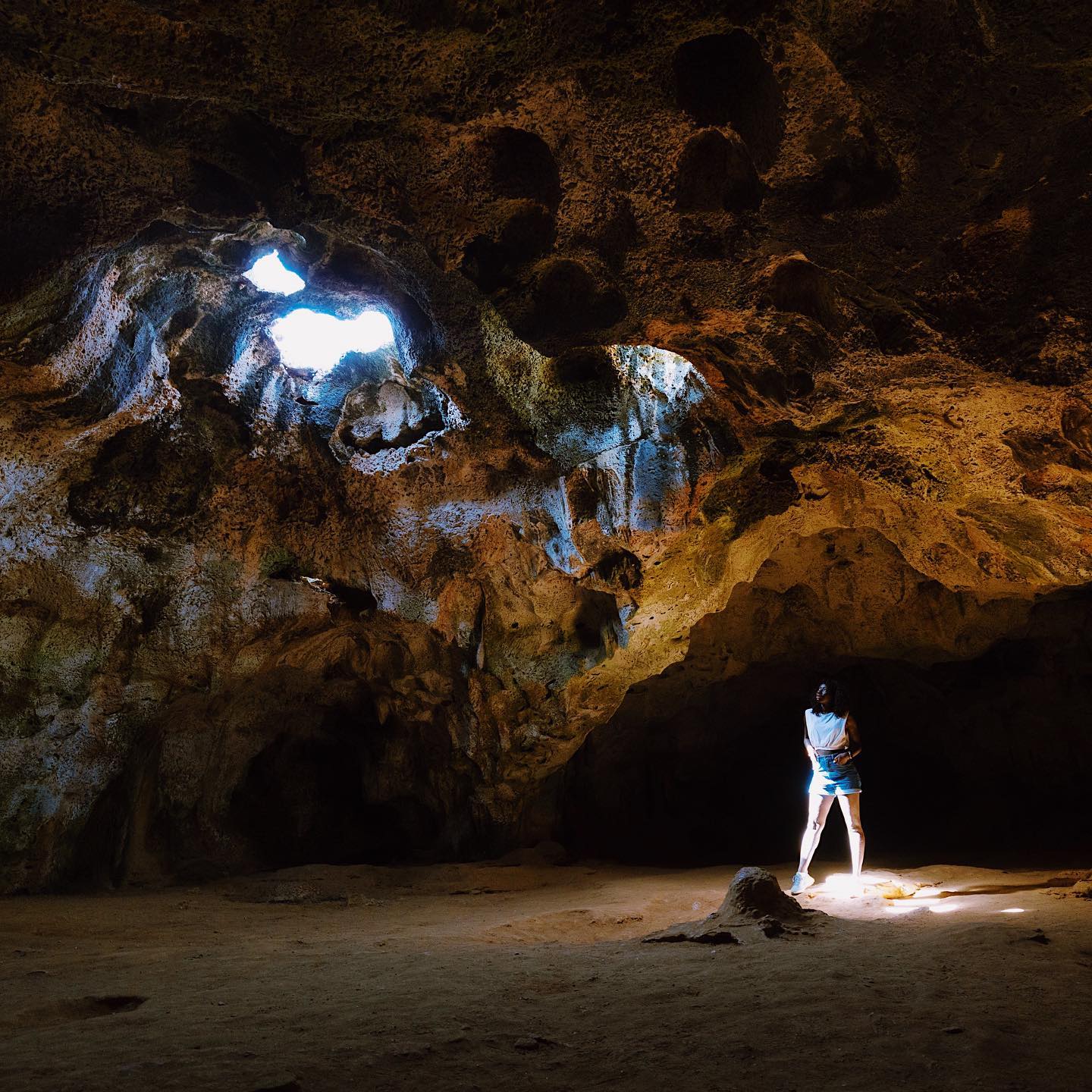
Quadirikiri Cave runs about 100 feet with two large chambers, and sunlight pours through holes in the roof, cutting shafts through the dark. Hundreds of harmless bats roost deeper in. A ranger walks you in from the parking lot, pointing out where to duck under the stalactites.
Seroe Jamanota rises 188 m (617 ft) — the highest point on the island. The guided hike covers 4.8 km in about two hours, ends at a sub-top with panoramic views over southern Aruba, and passes the trail to the overgrown Miralamar gold mine ruins, abandoned since mining ended in 1916.
Fontein is the only cave in the park with pre-Columbian Arawak drawings, red-brown pictographs on the ceilings alongside later marks from early European settlers. Access is gated and ranger-guided because of past graffiti, and you duck beneath low overhangs as the rangers explain what you're looking at.
Book a jeep, UTV, or horseback tour to the Natural Pool from $78, with free cancellation up to 24 hours before departure.
Swipe to see more
 Free Cancellation 8h
 Free Cancellation 4h 30min
 Free Cancellation 6h
 Free Cancellation 4h 30min Free Cancellation 4h 30min Free Cancellation 4h 30min
 Free Cancellation 4h
 Free Cancellation 4h 30min Free Cancellation 8h Free Cancellation 4h 30min Free Cancellation 4h 30min Free Cancellation 4h
Aim for February through April, when Aruba is at its driest — March averages just 0.6 in of rain — and go early: arrive before 10 am any time of year, since the park is open only until mid-afternoon (3:30 pm at San Fuego) and the shadeless trails get brutally hot by midday. Avoid October through January's rainy season if you're counting on the 4x4 run to the Natural Pool, as the dirt tracks turn muddy and rough.
The driest stretch on the island — March sees about 0.6 in (15 mm) of rain with daytime temps around 87°F (31°C). Trails are firm, the light shafts in Quadirikiri Cave glow, and sea conditions are at their calmest.
Warm, dry, and cheaper — shoulder-season hotel rates drop and crowds thin. The catch is midday: June–August afternoons get harsh on the exposed, shadeless trails, so plan around an early start.
Rainy season arrives in October. November is Aruba's wettest month (about 3.8 in / 98 mm), leaving dirt tracks muddy and complicating 4x4 runs to Conchi. Showers come in short bursts rather than all-day washouts.
December and January stay wet, so expect some muddy tracks. February turns the corner — it's among the driest, most comfortable months, and ranger-guided hikes to Jamanota's 188 m summit are at their best.
Arikok National Park is open daily, year-round. The San Fuego entrance and Visitor Center run 8:00 am to 3:30 pm; the Vader Piet entrance runs 8:30 am to 3:00 pm. Ignore older listings (TripAdvisor, US News) that show 8 am to 4 pm — the park authority, the Aruba Conservation Foundation, posts the earlier 3:30/3:00 pm closings. Arrive well before mid-afternoon, because cave visits and ranger tours wind down ahead of closing time. There are no seasonal closures; Aruba sits outside the hurricane belt, so the park stays open through the October–January rainy season, when dirt tracks can turn muddy.
| Category | Price |
|---|---|
| Adult (conservation day-pass) | USD 22 |
| Children under 17 | Free |
| Residents of Aruba, Bonaire and Curaçao (with valid local government-issued photo ID) | Discounted (local rate) |
| Guided ranger hike (per person, in addition to day-pass, max 10 people) | USD 25 |
Day-passes are sold at both entrances — San Fuego and Vader Piet — and no advance booking is needed for a standard visit. Guided ranger hikes do need to be reserved ahead with ACF at [email protected]. If you've seen an $11–20 entry fee quoted online, it's outdated; $22 is the current official ACF price, and the pass is required by law.
For complete schedules and ticket prices, visit our Hours & Fees page.
Arikok National Park sits on Aruba's northeast coast, roughly half the island's length from the hotel zone — about 30 minutes from Eagle Beach and under 40 from Noord. Most visitors drive themselves or take a taxi to the San Fuego entrance, following Route 4 through Paradera to Arikokweg; guided jeep tours and cruise-line excursions handle the rough in-park tracks for everyone else.
📍 San Fuego 70, Santa Cruz, Aruba (San Fuego entrance)
From the airport or Oranjestad, take Sasakiweg to the A1, then Route 4 through Paradera and continue on Arikokweg to the San Fuego entrance. A standard 2WD handles the paved and maintained gravel roads to the caves and viewpoints, but the Natural Pool track demands a 4x4. Standard rental insurance usually excludes damage on unpaved park trails — buy off-road coverage. Budget USD 40–100 per day.
Taxis are the easiest car-free option from Eagle Beach and Palm Beach hotels or the Oranjestad cruise port, covering roughly half the island in about half an hour. They're unmetered — reviewers report around USD 30 quoted from Noord, so agree on the fare before you leave. Arrange your return pickup too; rides near the park gate are scarce. Public Arubus buses don't reach the park.
Operators pick you up at most island hotels and run a half-day circuit — roughly 4–5 hours — that includes the cross-island transfer plus the off-road run to Conchi. DePalm Tours' half-day Natural Pool Safari is the best-known option, adding stops at Alto Vista Chapel and Natural Bridge. Guides handle the washboard gullies (motion-sickness sufferers, take note) and lead you down the steep stairs to the pool. Expect from about USD 183 per adult.
Cruise passengers must book park tours through the cruise line rather than independently. The drive from the Oranjestad terminal runs about 40 minutes each way, following Route 4 toward Paradera and the San Fuego entrance. Excursions typically bundle the caves, the Natural Pool and north-coast sights into one trip, with the price bundled into the excursion fee.
For detailed transport options and routes, visit our Directions page.
Arikok closes earlier than you'd guess: San Fuego shuts at 3:30 pm and Vader Piet at 3:00 pm, and cave visits and ranger tours wind down well before that. Arriving before 10 am also beats both the midday heat on shadeless trails and the jeep tour groups that clog the cave parking lots. Early light makes Quadirikiri's sun shafts photograph far better, too.
A standard 2WD rental handles the paved and gravel roads to the caves and viewpoints just fine — so don't pay for a 4x4 all week. The catch is Conchi: its track demands a 4x4, tour, horseback, or a long hike, and standard rental insurance excludes damage on unpaved park trails anyway. See the caves in your own car, then book a jeep tour for the Natural Pool.
Toilets exist in only two places: the San Fuego Visitor Center and the park restaurant between Boca Prins and the Fontein caves. If you're hiking the southern trails like Rooi Tambu–Dos Playa, a 7.5 km route, you'll be hours from either one. Use the restaurant as your lunch anchor and stock up on water there before heading deeper in.
The four guided hikes — Cunucu Arikok, Miralamar, Jamanota Hill, and Rooi Tambu–Dos Playa — cost USD 25 per person on top of your USD 22 day-pass, and groups cap at 10. Reserve by emailing [email protected]. Reasonably fit seniors should pick the easy Cunucu Arikok (5 km) or Miralamar (2 km) walks; Jamanota Hill is rated hard, with 4.8 km of climbing to Aruba's highest point.
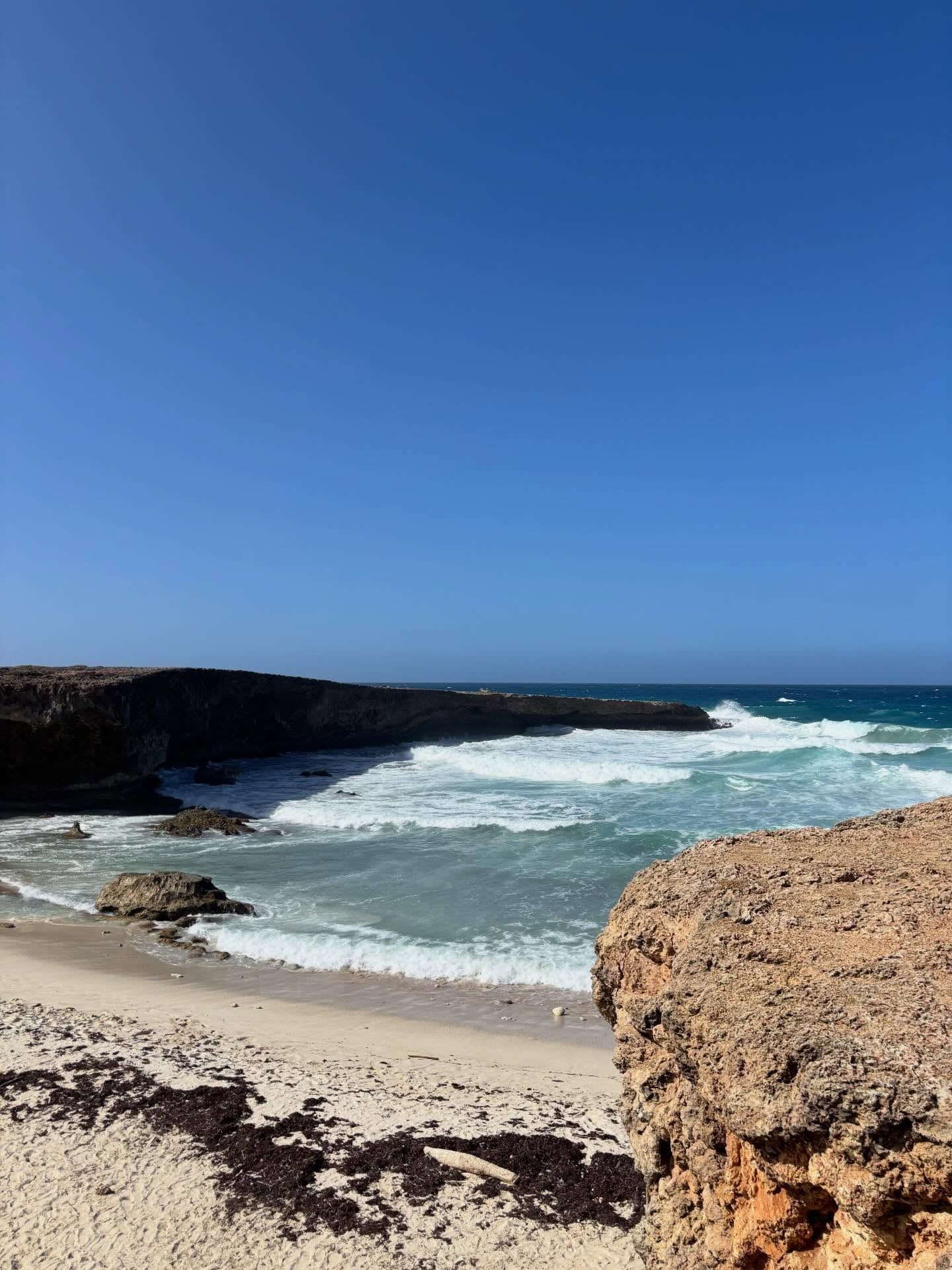
Boca Prins bans swimming outright because of strong currents and large rocks, and Dos Playa's surf is for watching, not wading — it's a sea turtle nesting site. At Conchi, check the posted advisories first: when swells rise, waves crash right over the volcanic rim, and conditions change fast. Bring water shoes for the rocky bottom and the steep, narrow stairs down.
Recreational drones are banned park-wide without a special permit, and the same law covers ATVs, UTVs, motorbikes, dogs, metal detectors, rock stacking, and collecting anything at all. Fines under Ministerial Order AB 2000 no. 59 run up to USD 100,000. Keep to park roads, hold the 20 km/h limit, and watch where you put your hands — the endangered cascabel rattlesnake lives among these rocks.
Massive weathered boulders rise straight out of the desert here, with paved paths and steps climbing between them for views. Petroglyphs left by the island's original inhabitants are still visible on the rock faces.
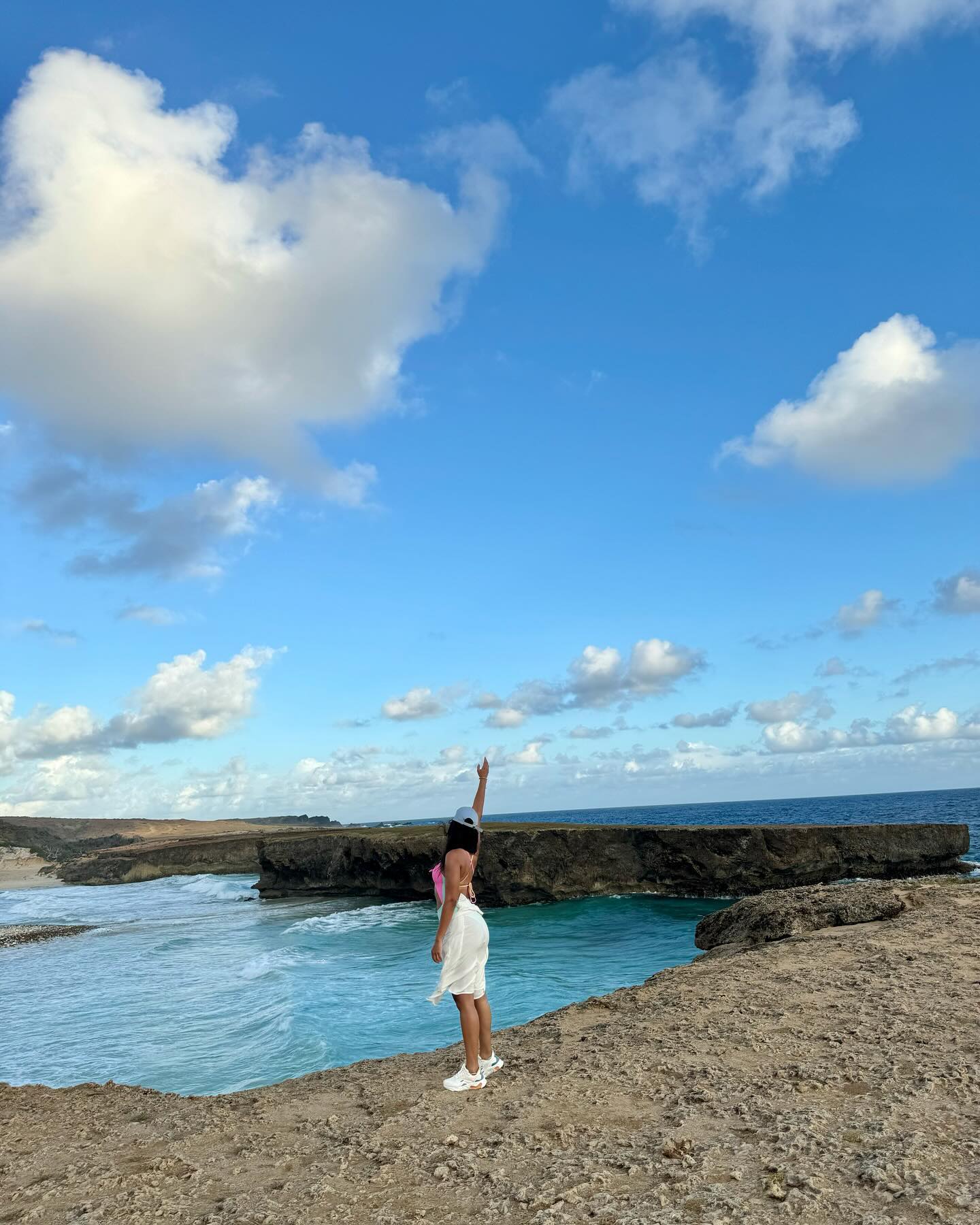
A limestone arch on the windward coast, carved by wave erosion and backed by a raw, wave-battered shoreline. It's one of Aruba's most popular photo stops and pairs easily with Arikok on a single north-coast loop.
A small, bright-yellow chapel on the north coast hillside, surrounded by massive cacti. Jeep tours returning from Arikok often stop here; the peaceful setting and view over the north shore contrast with the park's wild coast.
Read what travelers share about their experience visiting Arikok National Park — from practical tips to personal highlights.
Planning advice, comparisons, and practical tips.
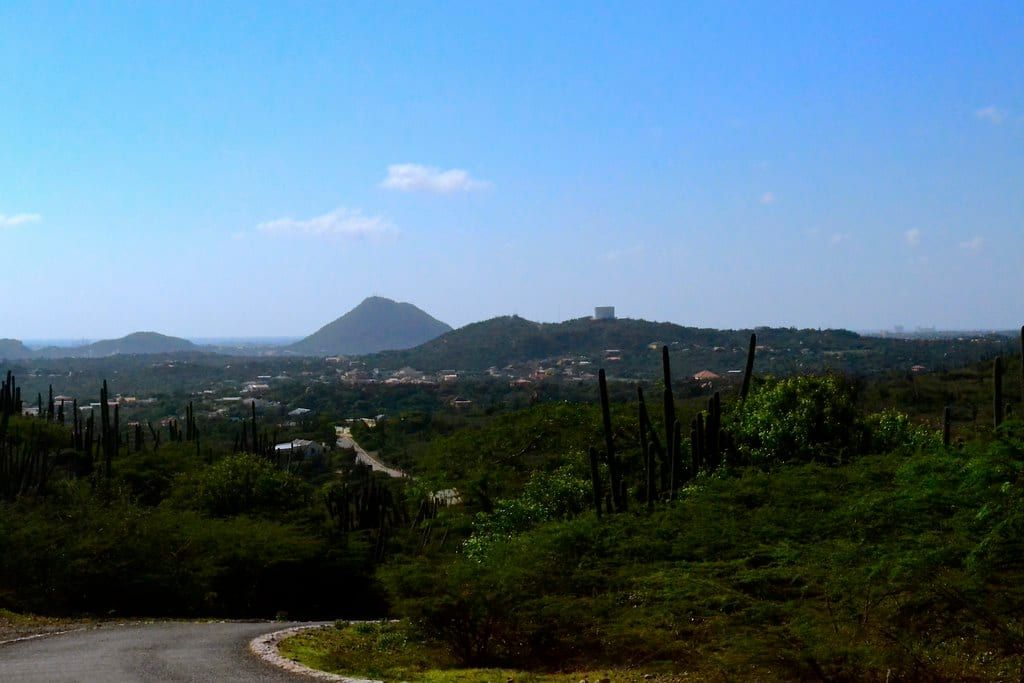
Arikok National Park covers a fifth of Aruba — 34 square kilometers of cactus desert, dry riverbeds, and a windward coast the trade winds pound all…
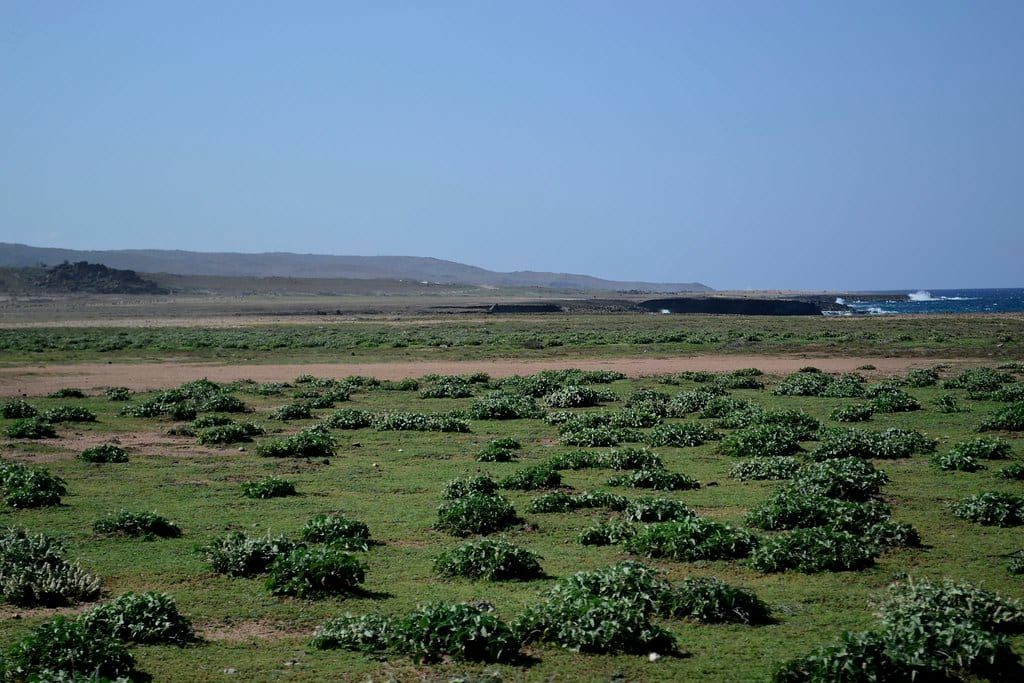
Conchi — the Natural Pool — is a basin of volcanic rock on Aruba's windward northeast coast where waves spill in over the stones but the worst of the…
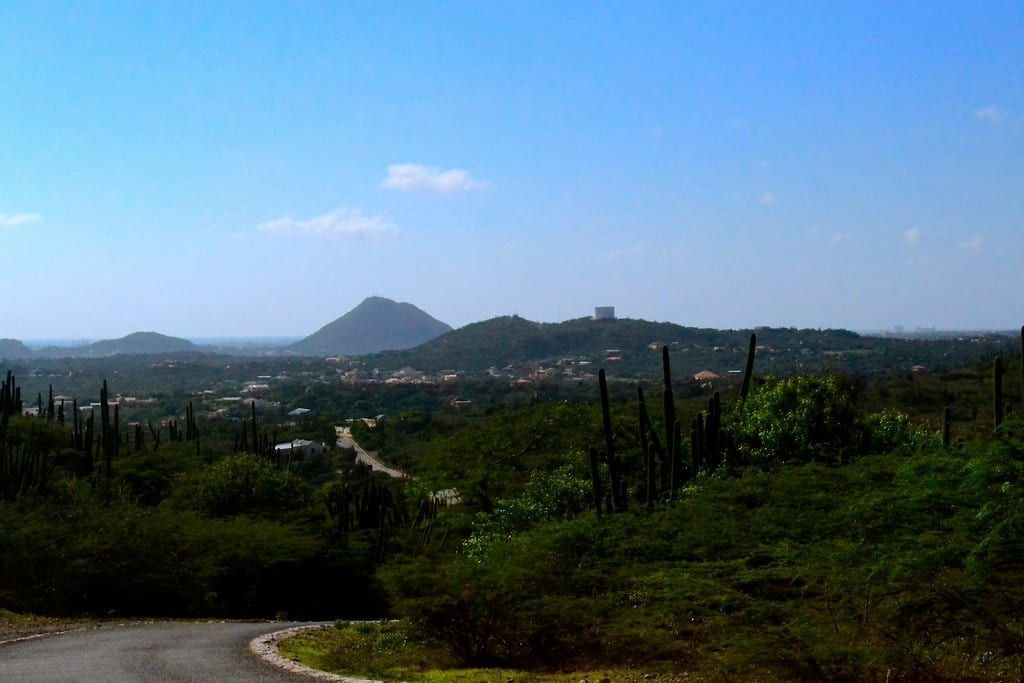
Exactly two of Arikok National Park's limestone caves are open to walk-in visitors: Quadirikiri, with its two sunlit dome chambers, and Fontein,…
Adults pay USD 22 for a conservation day-pass, sold at the San Fuego and Vader Piet entrances. Children under 17 get in free, and residents of Aruba, Bonaire and Curaçao receive a discount with a local government-issued photo ID. If you've read older guides quoting USD 11–20, those prices are outdated.
The park is open daily: the San Fuego entrance and Visitor Center run 8:00 am–3:30 pm, and the Vader Piet entrance 8:30 am–3:00 pm. Some travel listings still show 8 am–4 pm, but the park authority posts the earlier closing times. Aim to arrive before mid-afternoon, since cave visits and ranger tours wind down before closing.
Not for the main sights — a standard 2WD rental handles the paved and well-maintained gravel roads to the caves and viewpoints. But the track to the Natural Pool (Conchi) requires a 4x4, a guided tour, horseback or a multi-hour hike. One more thing: standard rental insurance usually excludes damage on unpaved park trails, so buy off-road coverage if you're self-driving.
Driving from the Noord hotel zone takes under 40 minutes via Sasakiweg, the A1 and Route 4 to the San Fuego entrance — about 30 minutes from Eagle Beach. A taxi from Noord runs roughly USD 30; agree on the fare before you leave, since taxis are unmetered and return pickups near the park gate are scarce. Public buses don't reach the park.
Plan half a day minimum — a typical 4–5 hour circuit covers the Visitor Center, Quadirikiri and Fontein caves, the Boca Prins dunes and Conchi by 4x4. Add one of the four guided ranger hikes (1.5–3.5 hours) and it becomes a full day. Start before 10 am, when trails are coolest and jeep tour crowds haven't arrived yet.
Carry 2–3 liters of water per person, plus a hat and sunscreen — the park is almost entirely shadeless and hot year-round, with daytime highs around 87°F (31°C). Wear sturdy closed shoes; flip-flops won't survive the rocky trails and uneven cave floors. Note that restrooms exist only at the San Fuego Visitor Center and the park restaurant between Boca Prins and the Fontein caves.
Only the paved path between the San Fuego car park and the Visitor Center is wheelchair-accessible; the trails, caves and Natural Pool stairs are unpaved and rocky. Less mobile visitors may prefer a guided jeep tour over self-driving, since even the main road bounces over dozens of low rocky gullies. Reasonably fit seniors can manage the two easy trails — Cunucu Arikok (5 km) and Miralamar (2 km) — but should skip the hard-rated Jamanota Hill hike (4.8 km).
No booking is needed for a standard visit — just buy your USD 22 day-pass at either entrance. Guided ranger hikes do require advance reservation at USD 25 per person, capped at 10 people, by emailing [email protected]. Cruise passengers are the exception: you must book park tours through your cruise line rather than independently.
Browse verified tours with free cancellation and instant confirmation.
Find Tours
