Exactly two of Arikok National Park's limestone caves are open to walk-in visitors: Quadirikiri, with its two sunlit dome chambers, and Fontein, where Arawak drawings cover the walls and ceiling. The third famous one — Huliba, the so-called Tunnel of Love — has been closed for preservation for years, despite what plenty of older guides still claim. Both open caves sit a short drive apart on Aruba's windward coast, cost nothing beyond the park's $22 day pass, and come with a ranger stationed at the entrance.
This guide covers all three caves honestly — what you'll see, what's closed, what it costs, whether you need a 4x4, and how to turn two 40-minute cave stops into a full day inside the park.
Arikok National Park's Caves at a Glance
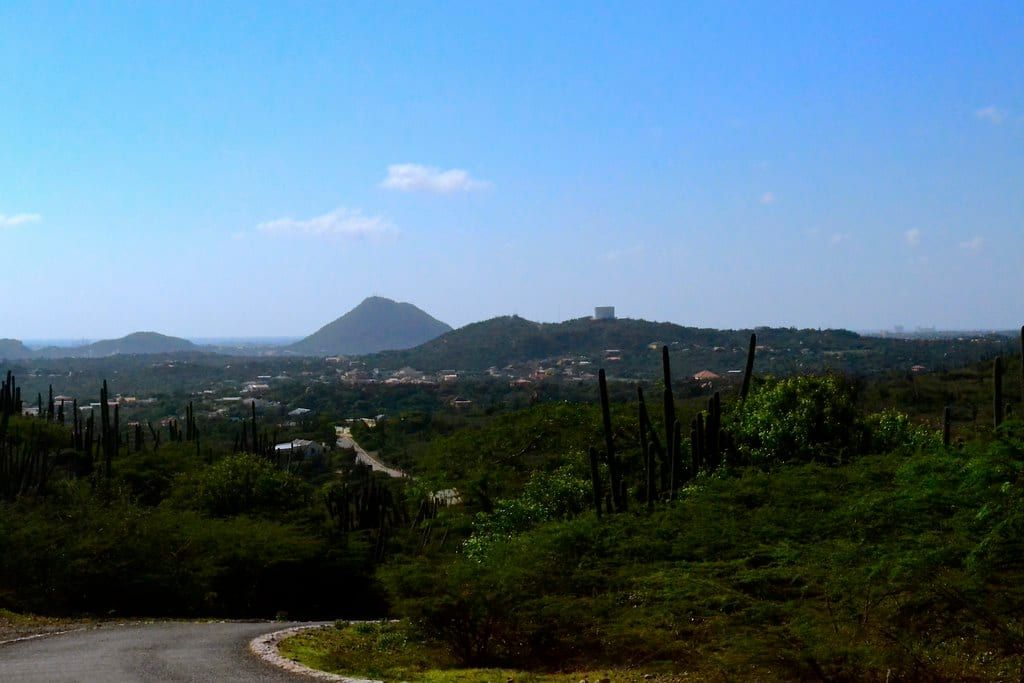
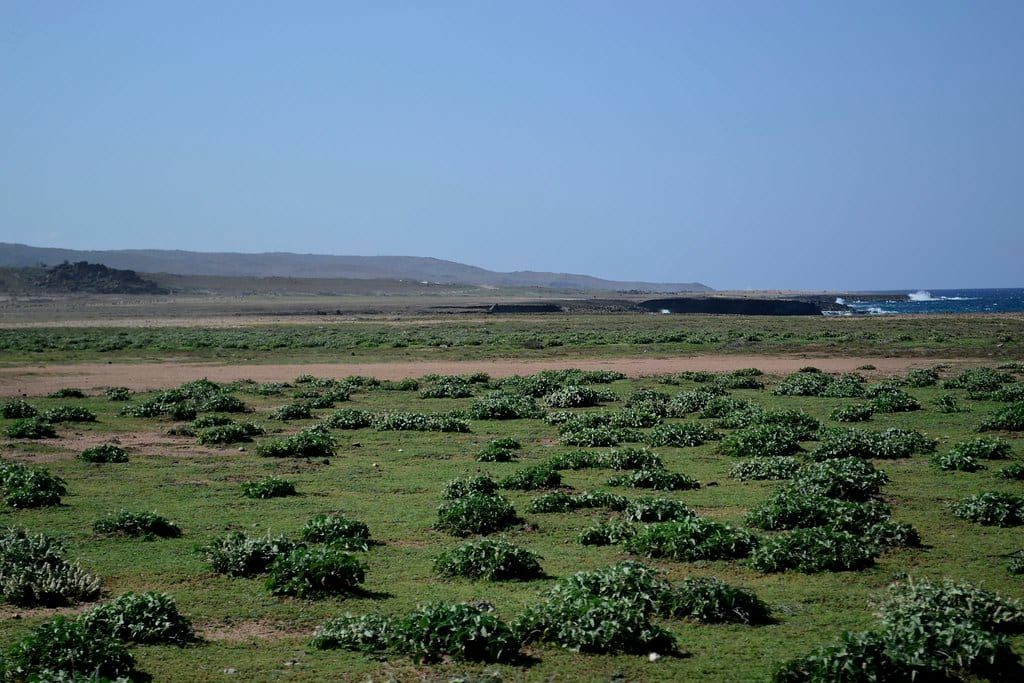
Arikok protects 34 square kilometers of Aruba's northeastern coast — roughly a fifth of the island — and has been a protected area since 2000, managed since 2003 by the Aruba Conservation Foundation (ACF). The park takes its name from Arikok hill, which rises 185 m inland from the caves. If you want the fuller backstory of the park before you go, the visitor center at the San Fuego entrance is the place to pick up free maps.
| Cave | Length | Signature feature | Current status |
|---|---|---|---|
| Quadirikiri | ~100 ft (30 m) | Two dome chambers lit through holes in the roof; hundreds of bats | Open daily — easiest visit |
| Fontein | ~50 m | Arawak drawings on walls and ceiling; 1500s graffiti | Open daily — ranger-guided |
| Huliba (Tunnel of Love) | ~300 ft (91 m) | Heart-shaped entrance; pirate-treasure legend | Closed for preservation |
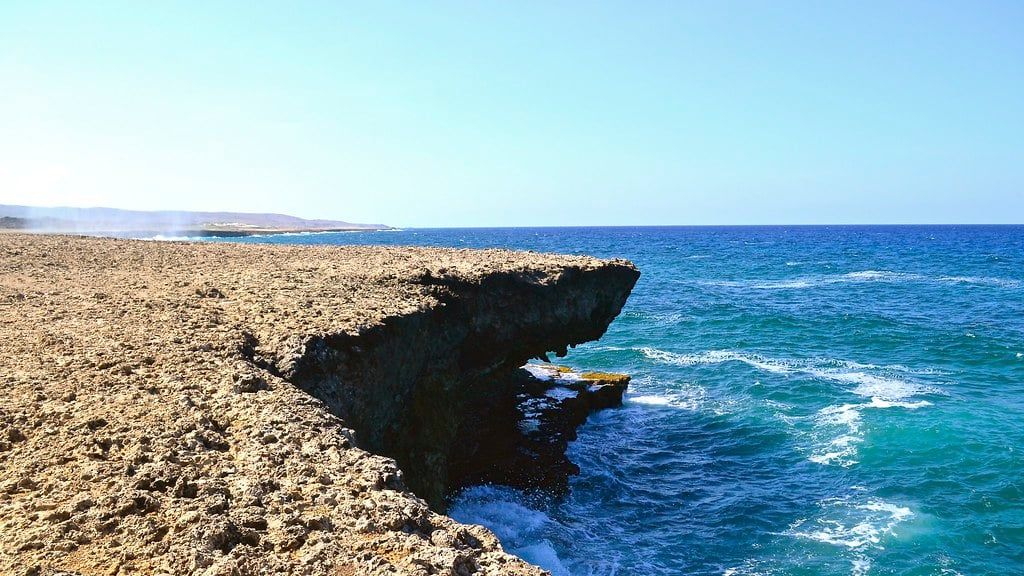
Geology first, because it explains everything you'll see underground. The windward coast is built on young limestone terraces, and ages of waves, rain and wind have hollowed the soft rock into shallow chambers — caves here are broad and low rather than deep shafts, with stalactites and stalagmites dripping from the ceilings in the damper sections. The same erosion punched the roof holes that make Quadirikiri famous.
One thing to know before you plan: the park rotates closures between its caves to protect them from visitor damage. Huliba has been shut for years, and another park cave was reportedly closed for seven. Before you drive out, check current openings with the ACF — don't build a day around a cave that might be roped off.
Quadirikiri Cave: Sunbeams, Skylights, and a Ceiling Full of Bats
A staircase climbs from the parking lot straight into the limestone wall, and within a dozen steps you're standing in a dome the size of a small church, with sunlight pouring through two holes in the roof. The cave runs about 100 feet in total, split between those two bright chambers and the darker tunnels connecting them. Footing is mostly easy — uneven in spots, with low stalactites to duck under, but no scrambling.
Look up in the tunnels and you'll see the residents: hundreds of small fruit bats roosting on the ceiling. They're harmless and protected, and they're the reason for the cave's oddest rule — flashlights and headlamps are banned inside Quadirikiri, so the skylights are all the light you get. Rangers use red lights to point out the roosts without waking the colony. Don't bring a flash camera near them either.
Local legend gives the cave its name and its holes. The story goes that the daughter of a local chief was imprisoned in the cave with her lover, and the gods broke open the roof so their spirits could escape to heaven — the two skylights are the exits. Rangers tell it better than any guidebook.
Fontein Cave: Arawak Rock Art and the Spring Next Door
Fontein is the history cave. Red-brown Arawak pictographs — spirals, figures, symbols — cover the walls, and it's the only cave on Aruba with drawings on the ceiling as well, which means you walk the whole chamber with your head tilted back. Guides attribute the art to Arawak peoples, though dating varies wildly by source, from roughly 1,000 years old to as much as 3,500; treat any precise figure with suspicion. Rangers at the entrance interpret the symbols as you go, and they're worth listening to — they'll point out formations and figures you'd walk straight past.
Just inside the metal gate at the entrance sits a second, cruder layer of history: names and dates scratched by early European visitors, some going back to the 1500s. So one wall holds both the oldest and some of the newest human marks on the island — graffiti before graffiti was a crime. The air inside is hot and humid, and the cave hosts its own small ecosystem of bats, crabs and insects among the stalactites.
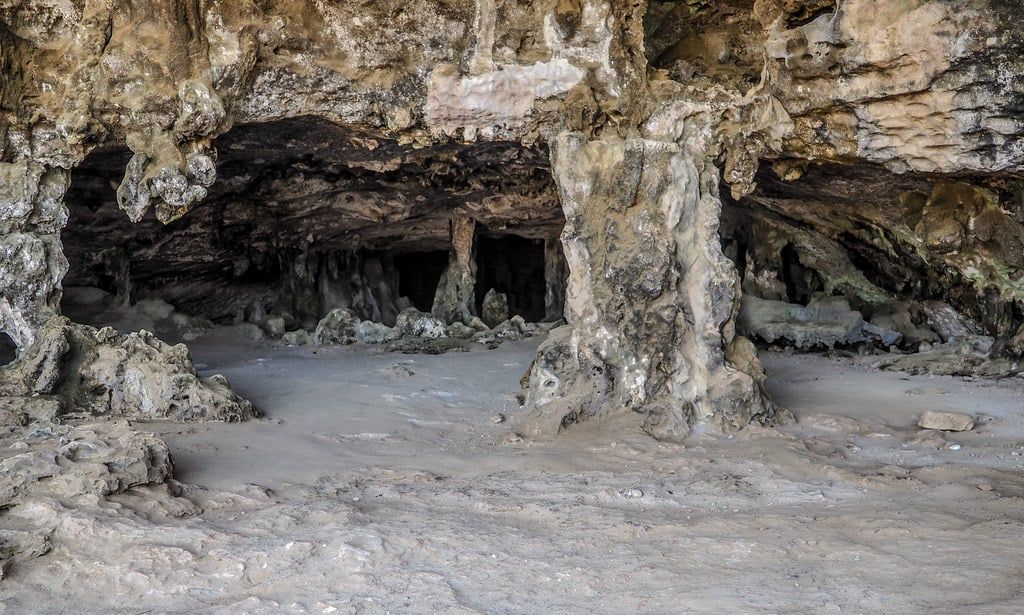
The cave takes its name from the freshwater spring just outside — fontein is Dutch for fountain or spring. Dip your feet in and small fish will nibble the dead skin off them, a free natural pedicure that kids find hilarious. Rangers note the rattlesnakes drink there too, so keep an eye on where you step.
Huliba Cave (The Tunnel of Love): Heart-Shaped, Legendary, and Closed
Huliba is the cave most articles describe as visitable and most visitors can't enter. It sits at Baranca Sunu — 'naked rock' — with an entrance shaped, unmistakably, like a heart, which earned it the Tunnel of Love nickname. Inside, about 300 feet of dark passages wind through the limestone, and local legend claims pirates hid treasure somewhere in them. On paper it's the most romantic of the three.
In practice, you'll view the heart-shaped mouth from outside, if that. Huliba has been closed to visitors for preservation reasons — a 2024–25 visit report found it shut for about a year, with reopening possible but unscheduled, while another park cave nearby had already been closed seven years. There's no timetable, so don't build your day around it. If it matters to you, check the ACF's current openings before you drive out.
The closure system is the point, not an accident. Heavy foot traffic damages formations and rock art, and bats abandon roosts that get too much disturbance, so the park shuts caves in rotation to let them recover. It's also why the etiquette rules at the open caves are enforced so strictly — the caves that stay open are the ones visitors treat well.
Planning Your Cave Visit: Passes, Hours, Tours, and Getting There
The caves are included in the park's conservation day pass: USD $22 per adult, children under 17 free, with a discount for residents of Aruba, Bonaire and Curaçao carrying local ID. Passes are sold at both entrances — no advance booking needed for a standard visit. Beware older guides quoting $11; that price is years out of date. If you want the full current hours and fee details, the ACF site is the authority.
Hours are where listings mislead. The San Fuego entrance and visitor center run 8:00 am to 3:30 pm; the Vader Piet entrance 8:30 am to 3:00 pm. Plenty of sites still advertise 8 am to 4 pm, but the desks close earlier than that, and cave visits with rangers wind down before closing — so arrive in the morning, not mid-afternoon. San Fuego is the easier entrance: it has the visitor center, free maps and the only other restrooms in the park's interior besides the restaurant near Boca Prins.
The drive from the Palm Beach or Eagle Beach hotel zone takes just under 40 minutes. No public bus reaches the park, so it's a rental car, a taxi (agree on the fare and a return pickup before you're dropped off) or a tour. Route 4 from Oranjestad through Paradera leads to the San Fuego entrance; full directions and transport options are worth checking before you set out.
Now the 4x4 question, answered plainly. You do not need four-wheel drive for the caves — the main park road to Quadirikiri and Fontein is paved or well-maintained gravel, and a regular rental driven slowly will get you there. Two things to watch: dozens of low drainage gullies cross even the main road (high clearance helps), and standard rental insurance usually excludes damage on unpaved park tracks, so buy the off-road coverage. 4WD is genuinely required only for the Natural Pool and the eastern beaches, and ATVs, UTVs and motorbikes are banned inside the park outright. If you'd rather not drive the rough stuff at all, jeep tours bundle the caves with the Natural Pool and Baby Beach in one guided loop.
Tours themselves are simpler than they sound. A park ranger is stationed at the mouth of each open cave and walks visitors through as part of entry — no extra charge, no booking. Independent park-authorized guides near the caves work for tips, and tipping isn't obligatory in Aruba, so a few dollars for a good interpretation is plenty. Cruise passengers are the exception: if you arrive by ship, you must book through the cruise line rather than independently.
Timing, in short: go early. Before 10 am you get the best light shafts in Quadirikiri, a cooler drive, and parking lots that aren't yet clogged with jeep tour groups.
What to Wear, What to Bring, and the Rules That Keep the Caves Open
Wear closed-toe shoes with grip — the cave floors are uneven rock, and flip-flops will punish you. Bring more water than seems reasonable; the cave area outside is hot and dry, and inside the air turns surprisingly hot and humid within a few steps. A camera, yes. A headlamp, no — it's banned in Quadirikiri anyway. A phone light or small torch is genuinely useful in Fontein's darker corners.
- Closed-toe shoes with grip for uneven rock
- Water — outside is hot and dry, inside hot and humid
- Camera with good low-light performance, no flash
- Phone light or small torch for Fontein (not Quadirikiri)
The rules are short and strictly enforced. Don't touch the bats, the walls or the drawings — skin oils damage rock art faster than weather does. No flash photography near the bats or the pictographs. Stay on the marked paths, and leave every rock, plant and animal where you found it: under the ministerial order that protects the park, disturbing or collecting anything is punishable by fines of up to USD $100,000. That's not a decorative number on a sign.
This is also what your $22 buys. The pass funds preservation work, the ranger program at the cave mouths and education on the island — the same machinery that rotates closures when a cave needs a rest. The fee is the reason the drawings are still legible.
How to Fit the Caves into a Day in Arikok
Do the caves first, while the light is best and the air is coolest. Each cave is a 30–45 minute stop, and they're minutes apart by car. Fontein sits just past Boca Prins, so the natural sequence is Quadirikiri in the early light, then Fontein and its spring, then the trade-wind dunes of Boca Prins for photos — there's a park restaurant between them if you need lunch and a restroom. Caves plus Boca Prins is a comfortable half day.
Dos Playa, a short drive south, makes an easy add-on: two wild coves that are among Aruba's most important sea turtle nesting sites, with leatherbacks and green turtles active depending on the season. The surf is powerful — it's a lookout, never a swim. If you'd rather walk the coast, the Rooi Tambu–Dos Playa ranger hike covers 7.5 km of it, and guided hiking options run $25 per person with a ten-person cap.
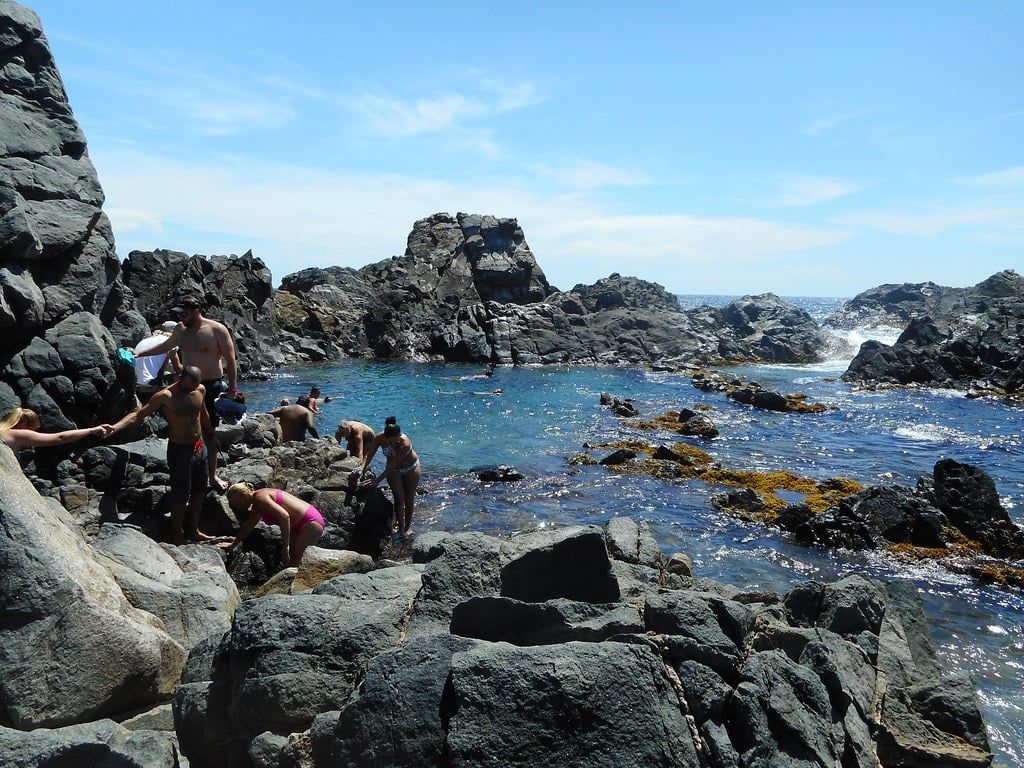
The full-day version adds Conchi, the Natural Pool — a swimmable basalt rock pool about 3.5 miles from the visitor center that reaches roughly 15 feet deep. It's reachable only by 4WD, horseback or a long hike, which is exactly why it pairs well with a cave morning: see the caves in your rental, then decide whether to tackle the Natural Pool track yourself or join one of the dedicated pool tours. Swim only when the sea is calm; waves crash over the rocks when swells rise.
One off-park mention, because the name confuses people: the Cave Pool is a different thing entirely, next to the Bushiribana Gold Mill Ruins north of the park. You reach it by a steep ladder down volcanic rock and a rough scramble — quieter than Conchi, but skip it with small children or anyone with mobility limits. It fits neatly at the end of a north-coast loop that can also take in the Natural Bridge and Alto Vista Chapel on the drive back toward the hotels.
Frequently asked questions
Can you visit the Arikok National Park caves without a tour?
Yes. Drive in on your conservation day pass — parking sits at or near both cave entrances — and a ranger stationed at each cave mouth walks you through as part of entry. Independent park-authorized guides work for tips, and tipping isn't obligatory in Aruba.
Are the bats in the caves dangerous?
No. The hundreds of bats roosting in Quadirikiri's darker sections are small, harmless fruit bats and a protected species. Don't touch them, keep flash photography away from them, and let them sleep.
Do I need a flashlight inside the caves?
Not in Quadirikiri — the roof skylights light the chambers, and flashlights and headlamps are banned there to protect the bats. Fontein is darker, so a phone light or small torch helps in its corners.
How much does it cost to see the caves in Arikok National Park?
The caves are included in the park's conservation day pass: USD $22 per adult, free for children under 17, with a resident discount for valid local ID. Older guides quoting $11 are years out of date.
Which Arikok caves are open right now?
Fontein and Quadirikiri are the two caves open to visitors. Huliba (the Tunnel of Love) has been closed for preservation, and the park rotates closures between caves to protect them — confirm current status with the Aruba Conservation Foundation before your visit.
Do you need a 4x4 to reach the caves?
No — the main park road reaches both open caves in a regular car driven slowly. 4WD is required only for the Natural Pool and eastern beaches, and ATVs, UTVs and motorbikes are banned inside the park.
What should I wear and bring for the caves?
Closed-toe shoes with grip for uneven rock, and plenty of water — it's hot and dry outside and hot and humid inside. Skip the headlamp (banned in Quadirikiri) and leave the drone at the hotel; drones are prohibited park-wide.
How much time do the caves take to visit?
Roughly 30–45 minutes per cave. The two open caves plus Boca Prins dunes fit into a half-day park loop; adding the Natural Pool makes it a full day.